A Guide to SII and SIRI: Tracking Inflammation and Disease Risk Through Routine Blood Work
Chronic inflammation is increasingly recognized as a feature of many seemingly unrelated conditions, from cardiometabolic and autoimmune disease to depression, cognitive decline, and cancer. Yet systemic inflammatory activity can be difficult to characterize through a single laboratory marker.
Two increasingly studied biomarkers—the Systemic Immune-Inflammation Index (SII) and Systemic Inflammation Response Index (SIRI)—offer a way to examine systemic inflammation through patterns of circulating immune cells. Both combine different immune-cell populations into composite indices.
Their potential value lies not simply in whether an index is elevated, but in what the underlying cellular pattern may reveal.
What Are SII & SIRI?
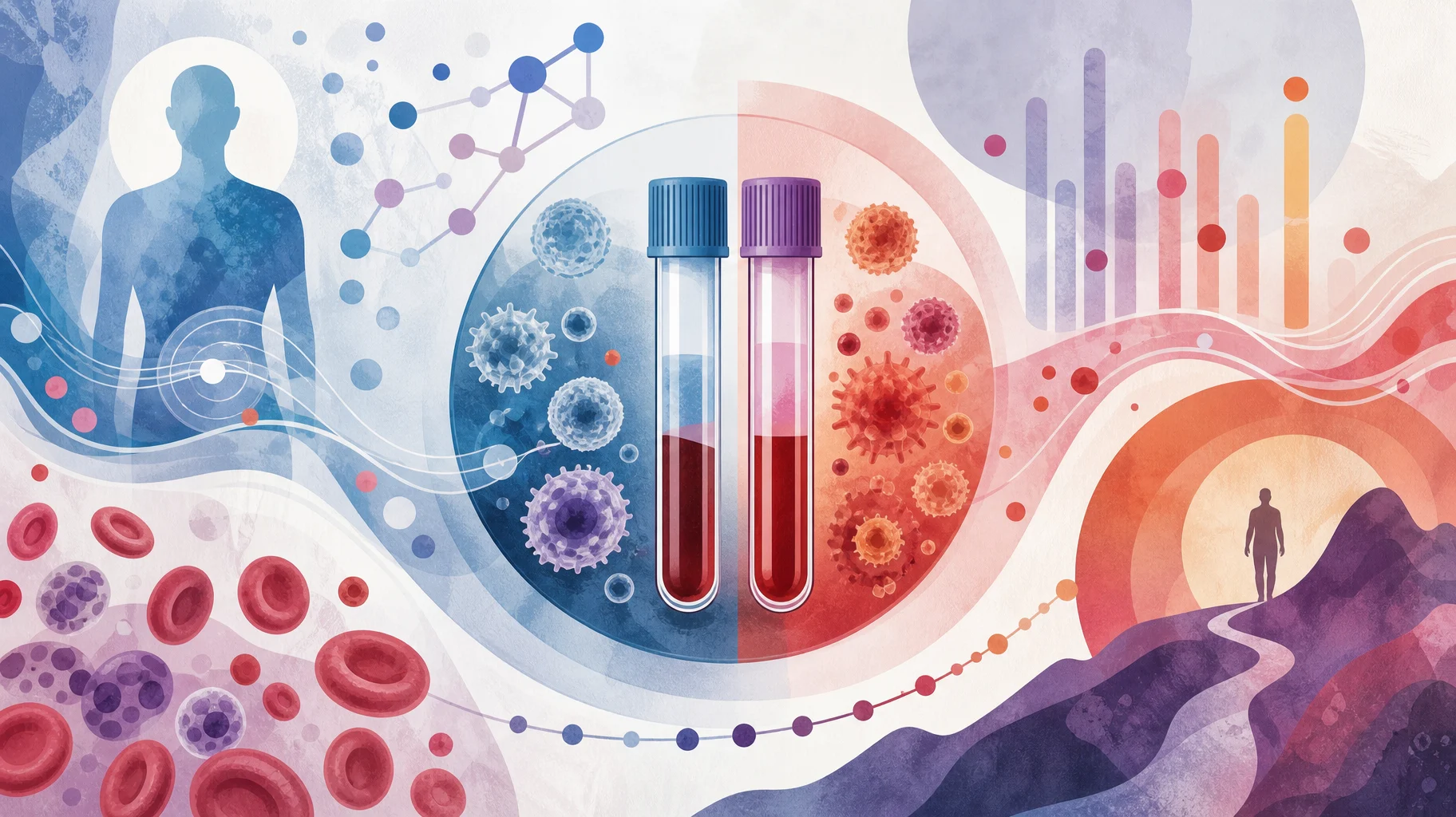
SII and SIRI are calculated from components of the CBC.
Systemic Immune-Inflammation Index (SII):
Platelets × Neutrophils ÷ Lymphocytes
Systemic Inflammation Response Index (SIRI):
Neutrophils × Monocytes ÷ Lymphocytes
Each component contributes different information about immune and inflammatory physiology.
- Neutrophils are central to innate immune defense and can increase with infection, tissue injury, stress, and inflammatory activation.
- Monocytes participate in innate immune surveillance and can differentiate into macrophages and other effector cells within tissues.
- Lymphocytes encompass adaptive immune populations involved in immune regulation, surveillance, and immunologic memory.
- Platelets extend beyond hemostasis. They interact with leukocytes and vascular tissues and participate in inflammatory, endothelial, and thrombotic signaling.
The ratios capture relationships among several circulating cell populations rather than relying on one cell count alone, which is why the underlying CBC remains essential to interpretation.
Why Do These Ratios Matter?
Inflammatory physiology is dynamic, shaped by infection, tissue injury, metabolic and psychological stress, environmental exposures, and changes in nutrient and energy availability. Metabolic and neuroendocrine signals also influence immune-cell behavior.
In chronic disease, metabolic, vascular, immune, oxidative, gastrointestinal, sleep, circadian, and stress physiology can all influence the conditions in which inflammatory signaling is initiated and resolved. SII and SIRI offer an accessible way to examine these relationships through circulating immune-cell patterns, making the clinical question less about whether a value is “high” or “low” and more about what biological pattern it reflects.
Cardiometabolic Health
The relationship between systemic inflammation and cardiometabolic disease is one of the most extensively studied areas for SII and SIRI.
In a prospective analysis of 42,875 U.S. adults followed for approximately 20 years, higher SII and SIRI were associated with increased all-cause and cardiovascular mortality (1).
Evidence from the UK Biobank further supports this relationship. Among 423,701 participants, higher systemic inflammatory biomarkers, including SII and SIRI, were associated with cardiovascular disease events (2).
Insulin resistance, impaired glucose regulation, dyslipidemia, central adiposity, hypertension, hepatic dysfunction, physical inactivity, sleep disruption, and chronic inflammatory conditions can all contribute to an inflammatory metabolic environment.
SII and SIRI may therefore add another dimension to cardiometabolic assessment by showing whether metabolic dysfunction occurs alongside immune activation.
From Systemic Inflammation to Mental Health
Communication between the immune system and brain involves inflammatory mediators, the blood-brain barrier, microglia, neurotransmitter metabolism, oxidative stress, mitochondrial function, and neuroendocrine signaling. Chronic psychological stress can influence neuroinflammatory signaling and contribute to depression and other stress-related conditions, while persistent immune activation may further influence brain function (3).
Clinical studies have begun to connect SII specifically with mental health outcomes. A 2025 study found that higher SII was associated with greater depression severity in patients with depression (4). In adolescents, higher SII was associated with depression, further supporting an association between systemic immune-inflammatory activity and mood-related physiology (5).
In an analysis of NHANES (National Health and Nutrition Examination Survey) data, higher SII and SIRI were associated with poorer cognitive performance, while higher SII was associated with greater epigenetic age acceleration (6-7). Together, these findings suggest that systemic inflammatory patterns may intersect with mental health, cognitive function, and biological aging.
Autoimmune Disease
SII and SIRI are also being investigated in immune-mediated conditions.
An analysis of NHANES data found associations between higher SII and SIRI and adult psoriasis, suggesting that these indices may reflect systemic inflammatory activity in a condition characterized by chronic immune dysregulation (8).
The clinical question is therefore not simply whether inflammation is present, but what may be sustaining immune activation.
Cancer & Systemic Inflammation
Inflammatory signaling can influence tumor biology, immune surveillance, angiogenesis, tissue remodeling, and interactions between malignant cells and the surrounding microenvironment. At the same time, cancer and its treatment can alter circulating immune-cell populations.
A 2024 meta-analysis examining colorectal cancer found prognostic associations involving SII and SIRI, supporting continued interest in these indices as markers of systemic inflammatory and immune status in oncology (9).
Stroke & Vascular Risk
In an analysis of NHANES participants with asthma, higher SII and SIRI were associated with stroke prevalence (10).
This finding is notable given the interaction among immune activation, endothelial dysfunction, oxidative stress, platelet biology, and metabolic health. Because SII incorporates platelets whereas SIRI incorporates monocytes, the two indices may provide complementary windows into systemic inflammatory physiology.
Interpreting SII & SIRI Together
These biomarkers should not be treated as interchangeable measures of “inflammation.” Their different formulas provide distinct information about the balance among innate immune activation, platelet biology, monocyte activity, and lymphocyte tone.
When Both SII & SIRI Are Elevated – When both indices are elevated, the pattern may reflect a broader shift toward innate and thrombo-inflammatory activity across multiple circulating immune-cell populations. The underlying CBC can help determine whether this reflects neutrophilia, lymphopenia, monocytosis, thrombocytosis, or a combination. Interpretation should also consider inflammatory, metabolic, infectious, and stress-related factors.
When SIRI Is Higher Than SII – Because SIRI incorporates monocytes rather than platelets, a disproportionately elevated SIRI may indicate a greater contribution from monocyte activity. The monocyte count and differential become especially relevant.
When SII Is Higher Than SIRI – Because SII incorporates platelets, a disproportionately elevated SII may highlight platelet biology alongside changes in neutrophils and lymphocytes. The full CBC and broader vascular, inflammatory, metabolic, and tissue-injury context can help clarify the pattern.
When Low Lymphocytes Drive The Elevation – Because lymphocytes appear in the denominator of both equations, lymphopenia can substantially increase either index. A high SII or SIRI therefore does not necessarily mean that all inflammatory cell populations are elevated; reduced lymphocytes may partly drive the result.
This is why SII and SIRI should always be interpreted alongside the underlying CBC and the broader clinical context.
Looking Upstream: What Might Be Driving the Pattern?
An elevated SII or SIRI should prompt consideration of what was happening physiologically when the blood was drawn. Acute infection, injury, surgery, medication exposure, or other short-term stressors can temporarily alter circulating immune-cell populations. If the pattern persists, broader influences such as metabolic health, immune activity, gastrointestinal function, sleep, or chronic psychological stress may be relevant.
Because inflammatory biomarkers are context-dependent, a single measurement provides a snapshot. Repeated measurements can help distinguish a transient shift from a persistent pattern, which may carry different clinical meaning than an elevation occurring around an acute physiological stressor.
Nutrition, Lifestyle, & the Conditions that Shape Inflammation
SII and SIRI also provide an opportunity to connect laboratory findings with modifiable physiological inputs.
Dietary patterns that provide adequate protein, healthy fats, fiber, vitamins, minerals, and bioactive compounds can shape the metabolic and immune environment in which inflammatory signaling occurs.
A systematic review and meta-analysis of randomized controlled trials found that Mediterranean dietary patterns reduced inflammatory markers including IL-6, IL-1, and C-reactive protein, supporting the role of overall dietary pattern rather than a single nutrient or food (11).
Nutrition may also influence the chronic low-grade inflammatory environment associated with aging. A review of nutrition and inflammaging highlights the potential role of dietary quality, including Mediterranean-style dietary patterns, in modulating this inflammatory burden (12).
This broader approach is consistent with the principle that nutrient status and immune function are interconnected.
Circadian Biology & Sleep
Inflammatory physiology is also strongly influenced by biological timing. Immune-cell activity, metabolism, and inflammatory signaling follow circadian patterns. Circadian disruption can alter macrophage inflammatory responses and affect the coordination between metabolism and immunity (13-14).
Sleep quality, timing, light exposure, shift work, and meal timing can therefore become relevant when evaluating persistent inflammatory patterns. Circadian alignment is one modifiable component of the environment regulating immune and metabolic function.
Stress & Mind-Body Physiology
The nervous, endocrine, immune, and gastrointestinal systems communicate continuously. Chronic activation of the stress response can influence intestinal physiology and inflammatory signaling, while the gut and immune system can, in turn, influence brain function and emotional well-being.
Research suggests that psychological stress can be relayed through the enteric nervous system to intestinal inflammatory pathways (15). Reviews of the microbiota-gut-immune-brain axis further describe how chronic stress, intestinal dysfunction, immune activation, and mental health can become interconnected (16).
Gut & Barrier Function
The intestinal barrier represents another potential contributor to systemic inflammatory signaling.
Research on gut microbiota-derived indole compounds, for example, demonstrates potential effects on hepatic metabolism and inflammation in metabolic dysfunction-associated steatotic liver disease (17).
For persistent inflammatory patterns, gastrointestinal symptoms, bowel function, dietary pattern, and metabolic health may provide relevant context.
Oxidative Balance
Redox biology provides yet another connection.
Reactive oxygen species are not inherently harmful; they participate in normal cellular signaling and immune defense. Problems arise when oxidative processes and antioxidant defenses become persistently mismatched, altering immune-cell behavior and inflammatory signaling.
The relationship between oxidative balance and systemic inflammation is reflected in emerging research linking dietary oxidative balance with SIRI and cardiovascular disease risk (18).
This supports a more nuanced approach that considers redox balance, nutrient adequacy, mitochondrial function, and the conditions generating oxidative stress.
From CBC-Derived Ratio to a Broader Clinical Picture
The accessibility of SII and SIRI is part of their appeal. Calculated from a standard CBC, they can add context to conventional laboratory assessment by connecting circulating immune-cell patterns with the broader physiological context.
SII and SIRI are most useful when treated as pieces of a larger immunometabolic picture. Rather than simply identifying an elevated index, the goal is to understand the cellular pattern it reflects and consider the antecedents, triggers, mediators, and lifestyle factors contributing to it.
To explore how immunometabolic biomarkers can inform clinical practice, join our October 6 webinar from 5–7 PM Pacific Time, From Insight to Implementation: Using Immunometabolic Biomarkers to Assess, Personalize, and Scale Patient Care, featuring Jeff Bland, PhD, Austin Perlmutter, MD, and Jeff Gladd, MD, followed by a panel discussion.
The session will explore how biomarker insights can be translated into patient assessment, risk stratification, personalized care, and scalable clinical practice.
References:
- Xia Y, Xia C, Wu L, Li Z, Li H, Zhang J. Systemic Immune Inflammation Index (SII), System Inflammation Response Index (SIRI) and Risk of All-Cause Mortality and Cardiovascular Mortality: A 20-Year Follow-Up Cohort Study of 42,875 US Adults. J Clin Med. 2023 Jan 31;12(3):1128. doi: 10.3390/jcm12031128. PMID: 36769776; PMCID: PMC9918056.
- Qin P, Ho FK, Celis-Morales CA, Pell JP. Association between systemic inflammation biomarkers and incident cardiovascular disease in 423,701 individuals: evidence from the UK biobank cohort. Cardiovasc Diabetol. 2025 Apr 15;24(1):162. doi: 10.1186/s12933-025-02721-9. PMID: 40234895; PMCID: PMC12001404.
- Hassamal S. Chronic stress, neuroinflammation, and depression: an overview of pathophysiological mechanisms and emerging anti-inflammatories. Front Psychiatry. 2023 May 11;14:1130989. doi: 10.3389/fpsyt.2023.1130989. PMID: 37252156; PMCID: PMC10213648.
- Bai Y, Fang Z, Dai H, Zhang Q, You P. The correlation between systemic immune-inflammation index and major depression in patients with depression. Front Psychiatry. 2025 May 8;16:1580151. doi: 10.3389/fpsyt.2025.1580151. PMID: 40405880; PMCID: PMC12095310.
- Schumacher A, Tu E, Albaum C, Korczak DJ. The systemic immune-inflammation index (SII) as a biomarker for depression in a community sample of adolescents. Compr Psychoneuroendocrinol. 2025 May 16;23:100302. doi: 10.1016/j.cpnec.2025.100302. PMID: 40496708; PMCID: PMC12150172.
- Wang X, Wen Q, Li Y, Zhu H, Zhang F, Li S, Zhan L, Li J. Systemic inflammation markers (SII and SIRI) as predictors of cognitive performance: evidence from NHANES 2011-2014. Front Neurol. 2025 May 9;16:1527302. doi: 10.3389/fneur.2025.1527302. PMID: 40417122; PMCID: PMC12098094.
- Liu R, Liu M, Wang C, Tao Z, Hu G. Association of systemic immune-inflammation index (SII) with epigenetic age acceleration in adults: insights from NHANES. Epigenetics. 2025 Dec;20(1):2541248. doi: 10.1080/15592294.2025.2541248. Epub 2025 Aug 4. PMID: 40758856; PMCID: PMC12323417.
- Ma R, Cui L, Cai J, Yang N, Wang Y, Chen Q, Chen W, Peng C, Qin H, Ding Y, Wang X, Yu Q, Shi Y. Association between systemic immune inflammation index, systemic inflammation response index and adult psoriasis: evidence from NHANES. Front Immunol. 2024 Feb 13;15:1323174. doi: 10.3389/fimmu.2024.1323174. PMID: 38415255; PMCID: PMC10896999. .
- Menyhart O, Fekete JT, Győrffy B. Inflammation and Colorectal Cancer: A Meta-Analysis of the Prognostic Significance of the Systemic Immune-Inflammation Index (SII) and the Systemic Inflammation Response Index (SIRI). Int J Mol Sci. 2024 Aug 2;25(15):8441. doi: 10.3390/ijms25158441. PMID: 39126008; PMCID: PMC11312822.
- Cheng W, Bu X, Xu C, Wen G, Kong F, Pan H, Yang S, Chen S. Higher systemic immune-inflammation index and systemic inflammation response index levels are associated with stroke prevalence in the asthmatic population: a cross-sectional analysis of the NHANES 1999-2018. Front Immunol. 2023 Aug 4;14:1191130. doi: 10.3389/fimmu.2023.1191130. PMID: 37600830; PMCID: PMC10436559.
- Koelman L, Egea Rodrigues C, Aleksandrova K. Effects of Dietary Patterns on Biomarkers of Inflammation and Immune Responses: A Systematic Review and Meta-Analysis of Randomized Controlled Trials. Adv Nutr. 2022 Feb 1;13(1):101-115. doi: 10.1093/advances/nmab086. PMID: 34607347; PMCID: PMC8803482.
- Di Giosia P, Stamerra CA, Giorgini P, Jamialahamdi T, Butler AE, Sahebkar A. The role of nutrition in inflammaging. Ageing Res Rev. 2022 May;77:101596. doi: 10.1016/j.arr.2022.101596. Epub 2022 Feb 24. PMID: 35219904.
- Carroll RG, Timmons GA, Cervantes-Silva MP, Kennedy OD, Curtis AM. Immunometabolism around the Clock. Trends Mol Med. 2019 Jul;25(7):612-625. doi: 10.1016/j.molmed.2019.04.013. Epub 2019 May 29. PMID: 31153819.
- Sun Y, Jiang W, Horng T. Circadian metabolism regulates the macrophage inflammatory response. Life Metab. 2022 Dec 9;1(3):224-233. doi: 10.1093/lifemeta/loac037. PMID: 39872076; PMCID: PMC11749265.
- Schneider KM, Blank N, Alvarez Y, Thum K, Lundgren P, Litichevskiy L, Sleeman M, Bahnsen K, Kim J, Kardo S, Patel S, Dohnalová L, Uhr GT, Descamps HC, Kircher S, McSween AM, Ardabili AR, Nemec KM, Jimenez MT, Glotfelty LG, Eisenberg JD, Furth EE, Henao-Mejia J, Bennett FC, Pierik MJ, Romberg-Camps M, Mujagic Z, Prinz M, Schneider CV, Wherry EJ, Bewtra M, Heuckeroth RO, Levy M, Thaiss CA. The enteric nervous system relays psychological stress to intestinal inflammation. 2023 Jun 22;186(13):2823-2838.e20. doi: 10.1016/j.cell.2023.05.001. Epub 2023 May 25. PMID: 37236193; PMCID: PMC10330875.
- Warren A, Nyavor Y, Beguelin A, Frame LA. Dangers of the chronic stress response in the context of the microbiota-gut-immune-brain axis and mental health: a narrative review. Front Immunol. 2024 May 2;15:1365871. doi: 10.3389/fimmu.2024.1365871. PMID: 38756771; PMCID: PMC11096445.
- Min BH, Devi S, Kwon GH, Gupta H, Jeong JJ, Sharma SP, Won SM, Oh KK, Yoon SJ, Park HJ, Eom JA, Jeong MK, Hyun JY, Stalin N, Park TS, Choi J, Lee DY, Han SH, Kim DJ, Suk KT. Gut microbiota-derived indole compounds attenuate metabolic dysfunction-associated steatotic liver disease by improving fat metabolism and inflammation. Gut Microbes. 2024 Jan-Dec;16(1):2307568. doi: 10.1080/19490976.2024.2307568. Epub 2024 Feb 1. PMID: 38299316; PMCID: PMC10841017.
- Chen K, Li S, Xie Z, Liu Y, Li Y, Mai J, Lai C, Wu Q, Zhong S. Association between oxidative balance score, systemic inflammatory response index, and cardiovascular disease risk: a cross-sectional analysis based on NHANES 2007-2018 data. Front Nutr. 2024 Jun 5;11:1374992. doi: 10.3389/fnut.2024.1374992. PMID: 38899319; PMCID: PMC11186475.