
Beyond Bone Density: The Roles of Inflammation, Stress, and the Gut Microbiome on Bone Health
Bone health is often viewed primarily in terms of bone density and structural support. However, this perspective captures only part of the story. Bone is a remarkably dynamic, metabolically active tissue that continually remodels itself in response to signals from throughout the body. Every day, bone cells integrate information from the endocrine, immune, gastrointestinal, and nervous systems to regulate bone formation, repair microscopic damage, adapt to mechanical demands, and maintain mineral homeostasis (1-3).
For women entering midlife, this physiological network undergoes profound change. Declining estrogen production, alterations in body composition, shifts in immune regulation, and changes in gut microbial diversity collectively reshape the biological environment in which bone remodeling occurs (4-5).
Emerging research has expanded our understanding of these interactions, highlighting the role of gut function in regulating inflammation, nutrient assimilation, hormone metabolism, and microbial metabolite production. Together, these pathways form an integrated communication network that helps maintain skeletal homeostasis across the lifespan (6), providing a broader systems-based perspective on bone remodeling and skeletal health.
Bone Remodeling: A Dynamic Process
Bone remodeling is a coordinated process involving the continual removal of old or damaged bone by osteoclasts and the formation of new bone by osteoblasts. Approximately 5–10% of the adult skeleton is remodeled each year, allowing bone to respond to mechanical loading, repair accumulated microdamage, regulate calcium and phosphate balance, and maintain skeletal strength throughout life (7).
Endocrine signals regulate bone cell activity; immune mediators influence the balance between bone formation and resorption; nutrients provide substrates and enzymatic cofactors for matrix formation; and the gastrointestinal tract supports nutrient assimilation and immune homeostasis (1, 3). When these systems remain well regulated, bone formation and bone resorption remain largely balanced. However, disturbances including hormonal changes, chronic inflammation, intestinal dysbiosis, impaired nutrient absorption, metabolic dysfunction, and chronic stress may gradually shift remodeling toward net bone loss (1, 3).
Hormones Set the Stage for Bone Health
Hormones establish the biological environment in which bone remodeling occurs. Estrogen and testosterone suppress excessive osteoclast activity while supporting osteoblast survival and function. As estrogen declines during menopause, bone resorption increasingly exceeds bone formation, accelerating bone loss (4, 8).
Bone remodeling is also influenced by endocrine pathways. Thyroid hormones regulate skeletal turnover, while growth hormone, insulin-like growth factor-1 (IGF-1), and insulin support osteoblast activity, collagen synthesis, skeletal anabolism, and muscle mass that mechanically supports bone (9).
Stress hormones further shape this hormonal landscape. Persistent activation of the hypothalamic-pituitary-adrenal (HPA) axis increases cortisol exposure, which may suppress osteoblast activity, impair collagen synthesis, reduce calcium absorption, and favor bone resorption. Chronic elevations in cortisol frequently coexist with disrupted sleep, increased visceral adiposity, insulin resistance, and low-grade inflammation, illustrating how endocrine dysfunction rarely occurs in isolation (10).
Bone cells also communicate directly with the immune system through the receptor activator of nuclear factor κB ligand (RANKL), receptor activator of nuclear factor κB (RANK), and osteoprotegerin (OPG) signaling pathway. Osteoblasts and immune cells produce RANKL, which stimulates osteoclast differentiation and activity, while OPG acts as a decoy receptor that limits excessive bone resorption. Estrogen and testosterone help maintain this balance by increasing OPG expression and suppressing RANKL signaling. As sex hormone concentrations decline, this regulatory brake is partially removed, creating conditions that favor increased osteoclast activity and accelerated bone loss (7).
These endocrine pathways interact with immune function, gastrointestinal physiology, and nutrient metabolism to regulate skeletal adaptation throughout life (3).
Inflammation: An Accelerator of Bone Resorption
Inflammation is essential for tissue repair and immune defense, but when inflammatory signaling becomes chronic, it can significantly influence skeletal homeostasis. Persistent low-grade inflammation—often referred to as inflammaging—is increasingly recognized as an important contributor to age-related bone loss and osteoporosis (11).
Pro-inflammatory cytokines, including interleukin-1β (IL-1β), interleukin-6 (IL-6), and tumor necrosis factor-α (TNF-α), promote osteoclast differentiation largely through activation of the RANKL signaling pathway. Sustained cytokine activity increases osteoclast number and function, tipping the balance of bone remodeling toward resorption (7, 11).
Adipose tissue further contributes to this inflammatory environment. Visceral adipose tissue functions as an active endocrine organ that secretes cytokines, adipokines, and other inflammatory mediators that influence immune regulation and bone metabolism. Alterations in leptin and adiponectin signaling, together with increased production of inflammatory cytokines, may contribute to bone loss, while promoting sarcopenia and reducing the mechanical loading that supports skeletal remodeling (3).
These findings identify inflammation as a central mediator linking endocrine function, metabolism, immune regulation, and skeletal integrity.
Gut Function: An Upstream Regulator of Skeletal Health
The gastrointestinal tract influences skeletal health far beyond calcium and vitamin D absorption. Through its roles in immune regulation, nutrient assimilation, hormone metabolism, microbial signaling, and intestinal barrier integrity, it forms the foundation of the gut-bone axis—an interconnected communication network linking gastrointestinal physiology and skeletal homeostasis (1-3,6).
One key mechanism involves maintaining the intestinal barrier. A healthy intestinal epithelium functions as a selectively permeable barrier, allowing nutrients to be absorbed while limiting the systemic passage of microbial products and inflammatory molecules. When barrier integrity becomes compromised, bacterial components such as lipopolysaccharides (LPS) may gain greater access to immune tissues, contributing to chronic low-grade inflammation and increased production of cytokines that stimulate osteoclast activity through RANKL signaling (1, 6).
Altered barrier function may amplify inflammatory pathways that influence bone remodeling, illustrating the close relationship between gut health and immune regulation.
Microbial Metabolites
Beyond shaping immune activity, the gut microbiome produces bioactive metabolites that influence physiological function throughout the body. Short-chain fatty acids (SCFAs)—primarily acetate, propionate, and butyrate—are among the best-studied microbial metabolites influencing bone physiology (2, 12).
SCFAs influence skeletal homeostasis through several complementary mechanisms. In addition to supporting intestinal barrier integrity and reducing inflammatory signaling, they help promote the expansion of regulatory T cells (Tregs), which contribute to immune homeostasis and may suppress excessive osteoclast activity (2).
Experimental studies suggest butyrate may stimulate bone formation through immune-mediated activation of Wnt signaling. Butyrate promotes Treg expansion in the bone marrow, increasing Wnt10b production by CD8+ T cells—a key regulator of osteoblast differentiation and bone formation (2).
Additional evidence suggests that SCFAs may support bone health by increasing circulating insulin-like growth factor-1 (IGF-1), improving mineral absorption, reducing osteoclastogenesis, and promoting immune homeostasis (2, 12).
Collectively, these findings illustrate how microbial metabolism extends beyond the gastrointestinal tract to influence skeletal physiology.
Estrobolome
Hormonal regulation and gut function also intersect through the estrobolome—the collection of intestinal microorganisms capable of metabolizing estrogens. After hepatic metabolism, estrogens are conjugated and excreted into the intestine through bile. Certain gut bacteria express β-glucuronidase, allowing a portion of these compounds to be deconjugated and reabsorbed through enterohepatic circulation (5, 13).
A healthy microbial community helps maintain estrogen metabolism. However, intestinal dysbiosis may alter this recycling process, potentially contributing to changes in circulating estrogen availability and downstream effects on bone remodeling (5). Emerging evidence suggests gut microbial composition may influence estrogen availability and skeletal remodeling (13).
Estrogen influences gut physiology. Estrogen also helps maintain intestinal barrier integrity, microbial diversity, and immune regulation. As estrogen declines during menopause, reciprocal changes in gut physiology may further influence inflammation and bone remodeling (5, 13).
Nutrient Assimilation
Optimal bone health depends not only on nutrient intake but also on efficient digestion, absorption, and utilization. Gastrointestinal inflammation, impaired digestive function, or dysbiosis may reduce absorption of nutrients essential for bone remodeling (14-15)
Calcium provides the primary mineral component of bone, while magnesium, vitamin D, vitamin K, and zinc support bone mineralization, collagen synthesis, osteocalcin activation, and osteoblast function.
The gut microbiome may further influence nutrient availability by regulating intestinal physiology, modifying bile acid metabolism, producing bioactive compounds, and interacting with host metabolic pathways. Consequently, GI function is an important determinant of skeletal health beyond dietary intake. Nutrient status depends on the integrated function of the gastrointestinal, metabolic, and immune systems.
Stress Physiology
Chronic psychological stress influences endocrine, immune, gastrointestinal, and skeletal physiology simultaneously through activation of the hypothalamic-pituitary-adrenal (HPA) axis (10).
Persistent elevations in cortisol may suppress osteoblast differentiation and function while promoting bone resorption, contributing to gradual bone loss. At the same time, chronic stress is associated with disrupted sleep, insulin resistance, visceral adiposity, and increased production of pro-inflammatory cytokines, creating a physiological environment that favors skeletal decline.
Stress also influences gut physiology through multiple mechanisms. Increased sympathetic nervous system activity may alter gastrointestinal motility, reduce microbial diversity, impair intestinal barrier integrity, and increase intestinal permeability. These changes can amplify inflammatory signaling while altering nutrient absorption and microbial metabolite production, highlighting the relationship between stress physiology and the gut-bone axis (3, 6).
Together, chronic stress, inflammation, gastrointestinal dysfunction, and hormonal dysregulation reinforce one another, highlighting the importance of stress resilience, restorative sleep, and healthy circadian rhythms for skeletal health.
Putting the Crosstalk Together
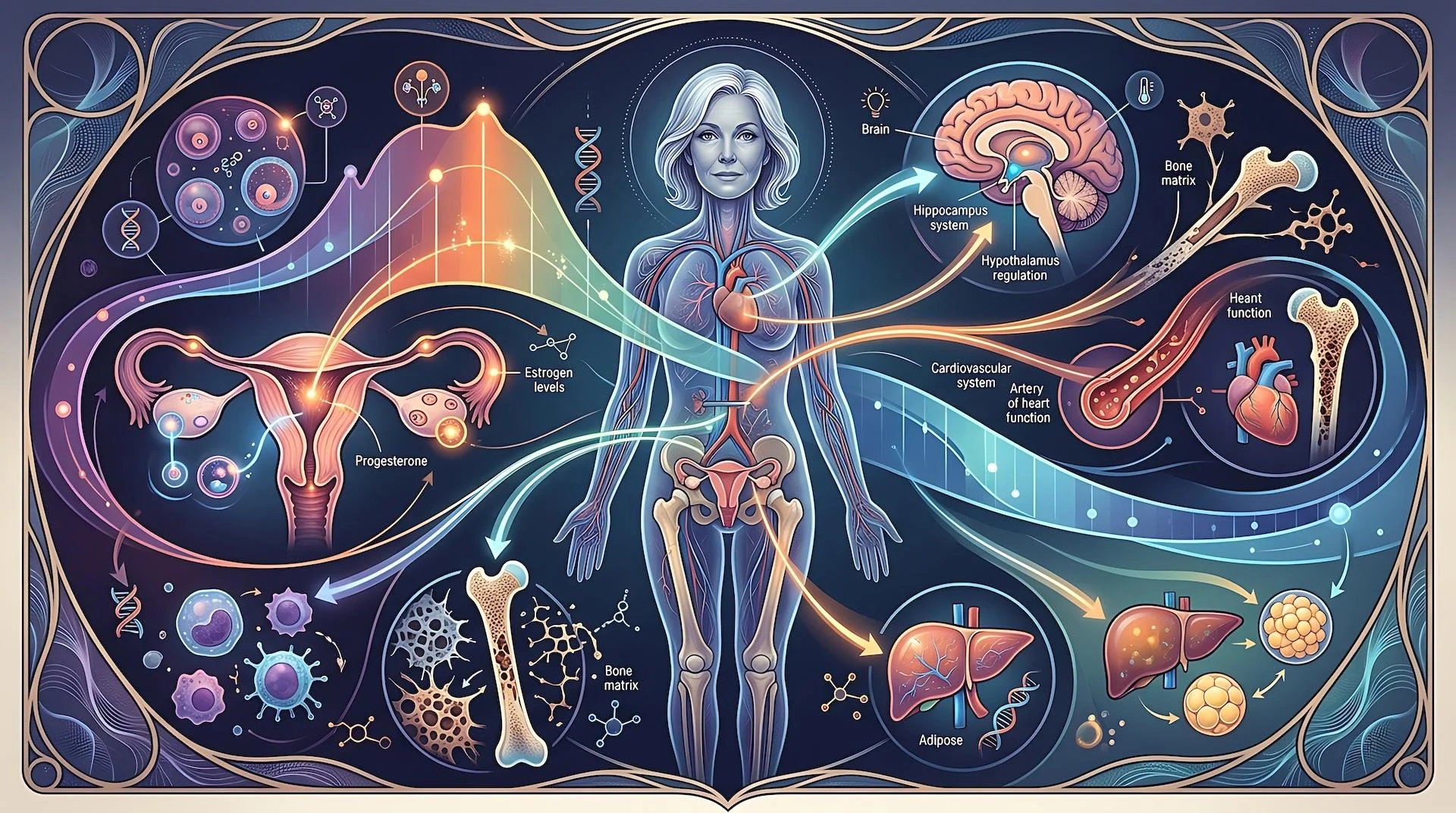
Hormones, inflammation, and gut physiology operate as components of an integrated biological network rather than independent systems. During menopause, declining estrogen alters bone remodeling while influencing immune regulation, intestinal barrier integrity, and gut microbial composition (4-6). Dysbiosis may amplify inflammatory signaling, alter nutrient assimilation and hormone metabolism, and reduce production of beneficial short-chain fatty acids that support immune regulation and osteoblast activity (2, 6, 12, 13). Chronic stress may further accelerate these processes through sustained HPA axis activation (10). These interacting pathways help explain why skeletal health reflects the integration of endocrine, immune, metabolic, gastrointestinal, and environmental influences.
A Systems Perspective on Bone Health
Understanding these interconnected pathways broadens our approach to bone health. Rather than focusing solely on bone mineral density or individual nutrients, a systems-based perspective considers the endocrine, immune, gastrointestinal, metabolic, and musculoskeletal networks that shape skeletal remodeling.
As research evolves, the gut-bone axis provides an increasingly valuable framework for understanding how these interconnected systems support skeletal homeostasis and may inform more personalized approaches to bone health across the lifespan.
Learn More
Growing evidence continues to reshape our understanding of bone health by highlighting interactions among hormones, inflammation, gut physiology, and the microbiome.
Join us on August 11th (5–7 PM) for The Gut-Bone Axis in Midlife Women: Inflammation, Bone Health, and Emerging Clinical Solutions moderated by Bridget Briggs, MD, along with experts Felice Gersh, MD, and Jeff Bland, PhD.
This webinar explores the evolving science of the gut-bone axis and evidence-informed strategies to support bone health through a systems-based understanding of endocrine, immune, gastrointestinal, and musculoskeletal functions.
References:
- Tu Y, Yang R, Xu X, Zhou X. The microbiota-gut-bone axis and bone health. J Leukoc Biol. 2021 Sep;110(3):525-537. doi: 10.1002/JLB.3MR0321-755R. Epub 2021 Apr 22. PMID: 33884666.
- Indrio F, Salatto A. Gut Microbiota-Bone Axis. Ann Nutr Metab. 2025;81(Suppl 1):47-56. doi: 10.1159/000541999. Epub 2025 Jan 23. PMID: 39848230.
- Li Z, Wang Q, Huang X, Wu Y, Shan D. Microbiome’s role in musculoskeletal health through the gut-bone axis insights. Gut Microbes. 2024 Jan-Dec;16(1):2410478. doi: 10.1080/19490976.2024.2410478. Epub 2024 Oct 10. PMID: 39387683; PMCID: PMC11469435.
- Rasul S, Mashayekhi Y, Javaid M, Merie S, Khalaf MA, Ahmed T, Haris M, Mustafa I. Hormonal Changes During Menopause and Their Impact on Bone Health: Insights from Orthopedic and Reproductive Medicine. Cureus. 2025 Sep 25;17(9):e93224. doi: 10.7759/cureus.93224. PMID: 41020017; PMCID: PMC12464279.
- Kverka M, Stepan JJ. Associations Among Estrogens, the Gut Microbiome and Osteoporosis. Curr Osteoporos Rep. 2024 Nov 25;23(1):2. doi: 10.1007/s11914-024-00896-w. PMID: 39585466; PMCID: PMC11588883.
- Cooney OD, Nagareddy PR, Murphy AJ, Lee MKS. Healthy Gut, Healthy Bones: Targeting the Gut Microbiome to Promote Bone Health. Front Endocrinol (Lausanne). 2021 Feb 19;11:620466. doi: 10.3389/fendo.2020.620466. PMID: 33679604; PMCID: PMC7933548.
- Ono T, Hayashi M, Sasaki F, Nakashima T. RANKL biology: bone metabolism, the immune system, and beyond. Inflamm Regen. 2020 Feb 7;40:2. doi: 10.1186/s41232-019-0111-3. PMID: 32047573; PMCID: PMC7006158
- Tenuta M, Hasenmajer V, Gianfrilli D, Isidori AM. Testosterone and Male Bone Health: A Puzzle of Interactions. J Clin Endocrinol Metab. 2025 Jun 17;110(7):e2121-e2135. doi: 10.1210/clinem/dgaf191. PMID: 40120082.
- Lindsey RC, Mohan S. Skeletal effects of growth hormone and insulin-like growth factor-I therapy. Mol Cell Endocrinol. 2016 Sep 5;432:44-55. doi: 10.1016/j.mce.2015.09.017. Epub 2015 Sep 25. PMID: 26408965; PMCID: PMC4808510.
- Yan Y, Li J, Lu Z, Zhang Z, Hao G, Zhao Y, Liu H, Liu Y, Bao X, Duan M, Li Y. Chronic Stress Leads to Time-Dependent Bone Loss Through HPA Axis Dysregulation and GR Nuclear Translocation Disorder. Int J Mol Sci. 2026 Jan 31;27(3):1449. doi: 10.3390/ijms27031449. PMID: 41683869; PMCID: PMC12897926.
- Amarasekara DS, Yu J, Rho J. Bone Loss Triggered by the Cytokine Network in Inflammatory Autoimmune Diseases. J Immunol Res. 2015;2015:832127. doi: 10.1155/2015/832127. Epub 2015 May 4. PMID: 26065006; PMCID: PMC4434203.
- Feng B, Lu J, Han Y, Han Y, Qiu X, Zeng Z. The role of short-chain fatty acids in the regulation of osteoporosis: new perspectives from gut microbiota to bone health: A review. Medicine (Baltimore). 2024 Aug 23;103(34):e39471. doi: 10.1097/MD.0000000000039471. PMID: 39183408; PMCID: PMC11346881.
- Chen M, Wang J, Yang Y, He Y, Li L. The interplay of estrogen, gut microbiome, and bone immunity in osteoporosis. Cell Commun Signal. 2025 Dec 2;23(1):516. doi: 1186/s12964-025-02538-9. PMID: 41331870; PMCID: PMC12673756.
- Perrone P, D’Angelo S. Gut Microbiota Modulation Through Mediterranean Diet Foods: Implications for Human Health. Nutrients. 2025 Mar 8;17(6):948. doi: 10.3390/nu17060948. PMID: 40289944; PMCID: PMC11944315.
- De Santis S, Cavalcanti E, Mastronardi M, Jirillo E, Chieppa M. Nutritional Keys for Intestinal Barrier Modulation. Front Immunol. 2015 Dec 7;6:612. doi: 10.3389/fimmu.2015.00612. PMID: 26697008; PMCID: PMC4670985.