Food As Medicine: Clinically Proven Results
Food is more than fuel; it fundamentally influences human health and physiological function. Beyond supplying energy and essential nutrients, foods contain bioactive compounds that interact with biological pathways involved in cellular signaling, gene expression, immune regulation, and metabolism. Advances in nutritional science are clarifying how dietary choices influence these processes across multiple physiological systems.
This is a central principle of functional medicine: recognizing how nutrition interacts with individual physiology and interconnected biological processes to influence health outcomes. Nutrition can also influence gene expression through epigenetic mechanisms.
How Food Influences Biological Processes
Foods contain naturally occurring bioactive compounds, including polyphenols, carotenoids, glucosinolates, and other phytochemicals, that interact with cellular receptors, enzymes, and transcription factors.
Nutrients such as folate, found in leafy greens like spinach, support one-carbon metabolism and methylation processes involved in DNA synthesis and repair, gene regulation, neurotransmitter production and metabolism, and immune-cell function (1).
Dietary compounds also influence pathways involved in oxidative stress, inflammation, immune response, and metabolic function. One example is nuclear factor erythroid 2-related factor 2 (NRF2), a transcription factor that regulates the expression of genes involved in antioxidant defenses, cellular protection, and responses to oxidative stress (2). Sulforaphane, derived from glucoraphanin in cruciferous vegetables, is a well-studied activator of this pathway.
Another important signaling regulator is nuclear factor kappa B (NF-κB), which regulates aspects of inflammatory and immune responses. Certain dietary compounds, including omega-3 fatty acids and plant polyphenols, can modulate inflammatory signaling.
Food also influences the gut microbiome. Fermentable dietary fibers are metabolized by gut microbes to produce short-chain fatty acids (SCFAs), including butyrate, propionate, and acetate. These metabolites contribute to intestinal barrier function, immune regulation, and metabolic signaling (3).
Foods With Demonstrated Health Benefits
Omega-3 Fatty Acids
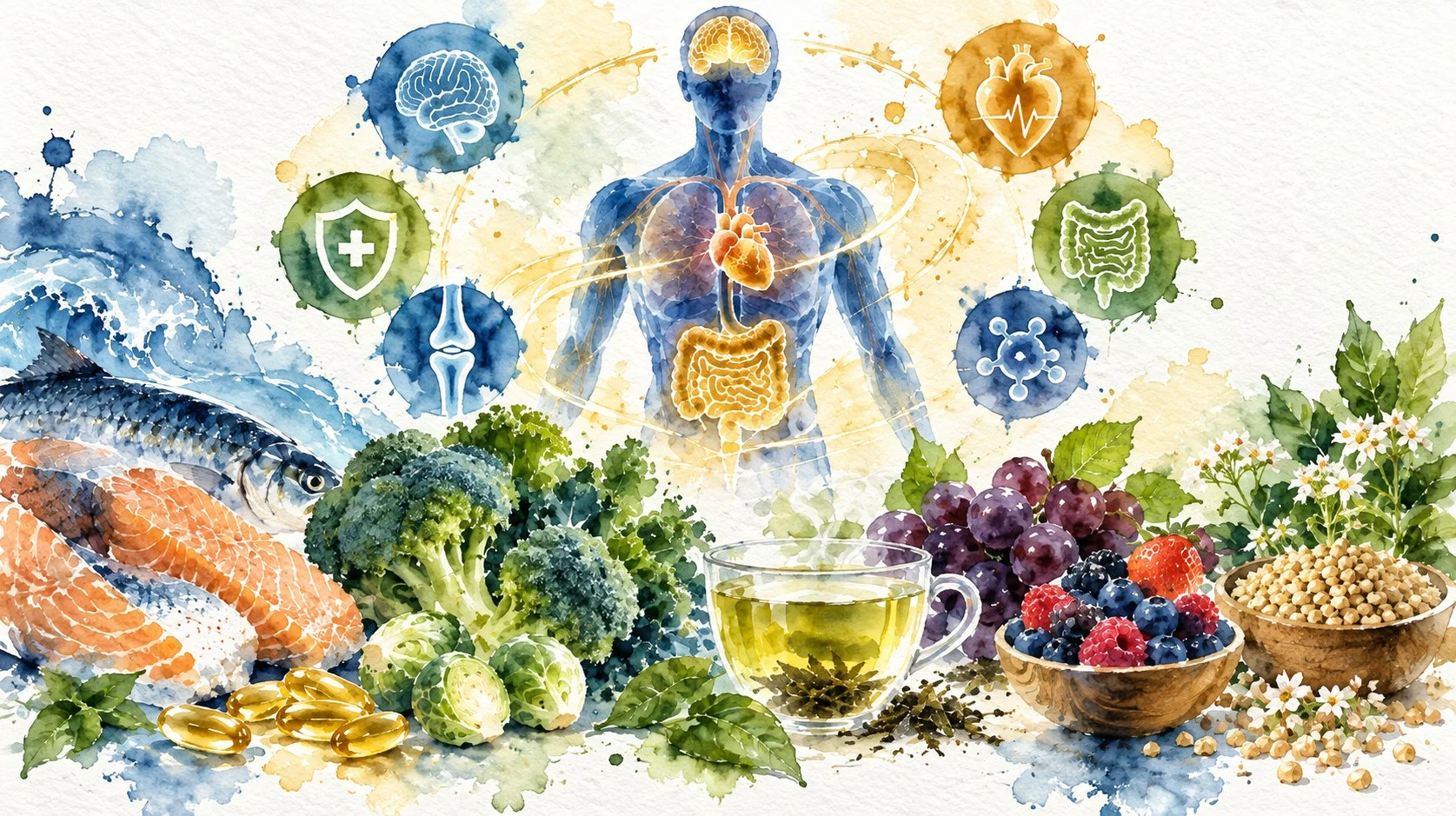
Fatty fish, including salmon, sardines, mackerel, and herring, provide the long-chain omega-3 fatty acids eicosapentaenoic acid (EPA) and docosahexaenoic acid (DHA). These fatty acids become incorporated into cell membranes, influence membrane fluidity, and participate in the production of lipid signaling molecules involved in inflammatory and immune regulation.
Omega-3 fatty acids also influence triglyceride metabolism and cardiovascular physiology. Research has examined dietary fish intake and omega-3 supplementation in relation to cardiovascular outcomes. In the Diet and Reinfarction Trial (DART), advice to increase fatty fish intake was associated with a 29% reduction in two-year all-cause mortality among men recovering from myocardial infarction (4). The GISSI-Prevenzione trial, involving more than 11,000 post-infarction patients, also found cardiovascular benefits, reporting a reduction in the combined primary endpoint with 1 g/day of omega-3 supplementation (5).
Subsequent research has clarified that cardiovascular outcomes may differ according to formulation, dose, and population. A 2024 review distinguished the cardiovascular benefits reported with prescription-grade EPA-only formulations from the less consistent outcomes observed with mixed EPA/DHA formulations (6).
EPA and DHA influence inflammatory signaling and serve as precursors to specialized pro-resolving mediators (SPMs), including resolvins, protectins, and maresins, which help coordinate the resolution of inflammation. Research has also examined their effects on immune cell activity and inflammatory gene expression (7-8).
Research also links omega-3 fatty acids to the gut–brain axis. A 2025 review describes how EPA and DHA may influence the microbiome, intestinal permeability, immune activation, and neuronal signaling in relation to depression (9).
Cruciferous Vegetables
Broccoli, brussels sprouts, kale, cabbage, and broccoli sprouts contain glucosinolates, a family of sulfur-containing phytochemicals. One particularly well-studied compound is glucoraphanin, which can be converted into sulforaphane through the action of the enzyme myrosinase.
Sulforaphane activates NRF2, stimulating the expression of genes involved in antioxidant and cellular defense responses. These include enzymes that participate in the regulation of oxidative stress and the metabolism of potentially harmful compounds.
Clinical research has demonstrated measurable effects. A randomized clinical trial involving 291 adults found that consumption of a broccoli sprout beverage increased urinary excretion of conjugated metabolites of benzene and acrolein, two environmental pollutants (10). These findings suggest that compounds derived from cruciferous vegetables can influence the body’s processing and elimination of certain environmental toxins.
Sulforaphane has also attracted interest for its potential influence on epigenetic regulation. Reviews describe interactions with pathways involving histone deacetylase activity, DNA methylation, and microRNA expression, mechanisms through which dietary compounds may influence gene expression (11-12).
Green Tea
Green tea contains catechins, a class of polyphenols that includes epigallocatechin gallate (EGCG). These compounds have been investigated for their effects on oxidative stress, lipid metabolism, glucose regulation, and cardiovascular health.
A systematic review and meta-analysis of 31 randomized controlled trials involving 3,321 participants found modest reductions in total and LDL cholesterol with green tea consumption, although HDL cholesterol and triglyceride levels were not significantly changed (13).
Proposed mechanisms include effects on lipid absorption, cholesterol metabolism, and metabolic cellular signaling.
Polyphenol-Rich Foods & Compounds
Grapes and berries contain diverse polyphenols, including flavonoids and anthocyanins, which have been investigated for their effects on inflammatory and oxidative stress markers. A 2021 meta-analysis of 24 randomized controlled trials found that grape and grape-product interventions modestly reduced circulating C-reactive protein (CRP), although they did not significantly change tumor necrosis factor-alpha (TNF-α) or interleukin-6 (IL-6) (14). A subsequent meta-analysis of 29 trials found improvements in several antioxidant measures but no significant overall effects on inflammatory markers (15). An additional systematic review of 45 human intervention studies found that blueberry consumption may improve markers of vascular function, with benefits observed following both acute and longer-term consumption (16).
Curcumin, a polyphenolic compound found in turmeric, has been investigated for its effects on inflammatory and oxidative stress pathways. Meta-analyses of randomized trials have reported improvements in several biomarkers, including C-reactive protein (CRP), tumor necrosis factor-alpha (TNF-α), interleukin-6 (IL-6), and markers of oxidative stress, as well as selected metabolic measures (17-18).
Himalayan Tartary Buckwheat
Himalayan Tartary buckwheat, an ancient food crop, is attracting scientific interest because of its distinctive phytochemical composition and potential effects on immune and metabolic health. It is particularly rich in rutin, a flavonoid polyphenol, and also provides dietary fiber and other bioactive plant compounds.
A 2024 pilot clinical study published in Frontiers in Nutrition investigated a standardized polyphenol-rich concentrate based on naturally occurring nutrients in Tartary buckwheat over 90 days (19).
The study identified 887 differentially methylated loci, including 336 hypermethylated and 551 hypomethylated sites, among participants included in the epigenetic analysis. Pathway enrichment analysis highlighted terms associated with ceramide kinase (CERK) activity (22-fold enrichment) and COP9 signalosome activity (6.7-fold enrichment). Methylation-based estimates also indicated increases in CD4 and CD8 memory T-cell subsets among participants with higher baseline epigenetic age acceleration. These findings offer preliminary insight into how combinations of plant-derived bioactive compounds may interact with epigenetic regulation and pathways relevant to immune health and aging.
Larger Clinical Trial: Cognitive Function & Related Outcomes
Research is extending beyond exploratory pilot studies to a larger controlled investigation of Himalayan Tartary buckwheat. A randomized, double-blind, placebo-controlled clinical trial evaluated an 18 g daily dose of Himalayan Tartary buckwheat sprout powder against a matched placebo over 12 weeks (20). The trial enrolled 850 participants, with 662 participants included in the reported outcome analyses.
Reported findings indicated statistically significant improvements in self-reported cognitive ability compared with placebo. Among participants who closely followed the protocol, improvement in cognitive ability was 31% greater than in the placebo group. Sleep quality and fatigue also showed statistically significant improvements favoring the intervention in protocol-adherent analyses. Participants demonstrated approximately 20% faster reaction times on the Flanker Squared cognitive performance task compared with baseline. These findings offer an additional area of investigation for food-derived bioactive compounds and cognitive health.
From Research to Clinical Application
In functional medicine, clinical application requires considering the potential benefits of specific foods alongside bioavailability, dietary patterns, and the individual’s broader physiological and clinical context.
Several principles can help guide this approach:
- Prioritize nutrient-dense, minimally processed foods. Emphasize vegetables, fruits, legumes, whole grains, nuts, seeds, and sources of healthy fats and adequate protein.
- Include a diversity of plant foods. Different vegetables, fruits, herbs, spices, and other plant foods provide distinct phytochemicals and dietary fibers that support a range of physiological processes.
- Consider individual nutritional needs and responses. Dietary requirements may vary according to metabolic health, gastrointestinal function, genetics, lifestyle, and other individual factors.
- Use clinical context and mind-body awareness to guide dietary interventions. Symptoms, medical history, nutritional status, appropriate laboratory findings, and attention to the body’s responses can help inform individualized recommendations.
Food as Medicine Within a Broader Lifestyle Context
Nutrition does not influence physiology in isolation. Sleep, circadian rhythm, movement, stress physiology, and social and environmental factors intersect with metabolic, gastrointestinal, neurological, and immune function. Together, they shape nutritional needs, digestion, nutrient utilization, and responses to dietary intervention.
Circadian rhythm helps coordinate metabolic activity, hormone signaling, and immune function (21). Sleep disruption and chronic stress can influence glucose regulation, inflammatory signaling, and metabolic demands. Physical activity affects mitochondrial function and metabolic health.
Sleep is central to these relationships. Beyond supporting neurological function and metabolic regulation, sleep helps coordinate immune activity and supports glymphatic clearance of metabolic waste products from the brain (22). Gut microbial composition and activity also follow daily rhythms. These microbial rhythms are shaped by host circadian patterns, sleep–wake cycles, and meal timing, while microbial metabolites can, in turn, influence host metabolic and immune signaling (23). Disruptions in these relationships may contribute to changes in microbial composition, intestinal barrier function, and inflammatory activity.
Chronic stress can affect digestion through the gut–brain axis, influencing GI motility, digestive secretions, intestinal barrier function, and microbial activity (24). Mindfulness-based stress reduction, yoga, and tai chi may support stress regulation and autonomic balance (25-27). Morning light exposure helps synchronize circadian rhythm, while time in nature and meaningful social connection also support well-being and help buffer the effects of stress (28).
Ultimately, the concept of food as medicine recognizes that nutrition’s influence on health extends beyond nutrient intake alone. Through its interactions with broader lifestyle and environmental factors, food can help shape cellular function, physiological regulation, and healthy aging.
Join our free webinar, Food as Medicine Made Real: What the Largest Trial of a Single Whole Food Means for the Future of Healthcare, on December 8 from 5-7 PM PST, featuring Jeffrey Bland, PhD, Austin Perlmutter, MD, and Taylor Bland. Explore emerging research on Himalayan Tartary buckwheat, including metabolomic, epigenetic, and clinical findings related to brain, immune, and metabolic health.
References:
- Lyon P, Strippoli V, Fang B, Cimmino L. B Vitamins and One-Carbon Metabolism: Implications in Human Health and Disease. 2020 Sep 19;12(9):2867. doi: 10.3390/nu12092867. PMID: 32961717; PMCID: PMC7551072.
- Dos Santos EA, Alvarez-Leite JI. Dietary Bioactive Compounds: Cellular Sensory Pathways, Microbial Partners, and Clinical Realities. Nutrients. 2026 Sep 14;18(18):3001. doi: 10.3390/nu18183001. PMID: 42796983; PMCID: PMC13610585.
- Mukhopadhya I, Louis P. Gut microbiota-derived short-chain fatty acids and their role in human health and disease. Nat Rev Microbiol. 2025 Oct;23(10):635-651. doi: 10.1038/s41579-025-01183-w. Epub 2025 May 13. PMID: 40360779.
- Burr ML, Fehily AM, Gilbert JF, Rogers S, Holliday RM, Sweetnam PM, Elwood PC, Deadman NM. Effects of changes in fat, fish, and fibre intakes on death and myocardial reinfarction: diet and reinfarction trial (DART). 1989 Sep 30;2(8666):757-61. doi: 10.1016/s0140-6736(89)90828-3. PMID: 2571009.
- Dietary supplementation with n-3 polyunsaturated fatty acids and vitamin E after myocardial infarction: results of the GISSI-Prevenzione trial. Gruppo Italiano per lo Studio della Sopravvivenza nell’Infarto miocardico. Lancet. 1999 Aug 7;354(9177):447-55. Erratum in: Lancet 2001 Feb 24;357(9256):642. Erratum in: Lancet. 2007 Jan 13;369(9556):106. PMID: 10465168.
- Sherratt SCR, Mason RP, Libby P, Steg PG, Bhatt DL. Do patients benefit from omega-3 fatty acids? Cardiovasc Res. 2024 Feb 17;119(18):2884-2901. doi: 10.1093/cvr/cvad188. PMID: 38252923; PMCID: PMC10874279.
- Mendivil CO. Dietary Fish, Fish Nutrients, and Immune Function: A Review. Front Nutr. 2021 Jan 20;7:617652. doi: 10.3389/fnut.2020.617652. Erratum in: Front Nutr. 2021 May 19;8:693773. doi: 10.3389/fnut.2021.693773. PMID: 33553231; PMCID: PMC7855848.
- Bodur M, Yilmaz B, Ağagündüz D, Ozogul Y. Immunomodulatory Effects of Omega-3 Fatty Acids: Mechanistic Insights and Health Implications. Mol Nutr Food Res. 2025 May;69(10):e202400752. doi: 10.1002/mnfr.202400752. Epub 2025 Mar 30. PMID: 40159804; PMCID: PMC12087734.
- De Cillis F, Begni V, Genini P, Leo D, Riva MA, Cattaneo A. Restoring Balance: The Role of Omega-3 Polyunsaturated Fatty Acids on the Gut-Brain Axis and Other Interconnected Biological Pathways to Improve Depression. 2025 Oct 31;17(21):3426. doi: 10.3390/nu17213426. PMID: 41228497; PMCID: PMC12608965.
- Egner PA, Chen JG, Zarth AT, Ng DK, Wang JB, Kensler KH, Jacobson LP, Muñoz A, Johnson JL, Groopman JD, Fahey JW, Talalay P, Zhu J, Chen TY, Qian GS, Carmella SG, Hecht SS, Kensler TW. Rapid and sustainable detoxication of airborne pollutants by broccoli sprout beverage: results of a randomized clinical trial in China. Cancer Prev Res (Phila). 2014 Aug;7(8):813-823. doi: 10.1158/1940-6207.CAPR-14-0103. Epub 2014 Jun 9. PMID: 24913818; PMCID: PMC4125483.
- Asif Ali M, Khan N, Kaleem N, Ahmad W, Alharethi SH, Alharbi B, Alhassan HH, Al-Enazi MM, Razis AFA, Modu B, Calina D, Sharifi-Rad J. Anticancer properties of sulforaphane: current insights at the molecular level. Front Oncol. 2023 Jun 16;13:1168321. doi: 10.3389/fonc.2023.1168321. PMID: 37397365; PMCID: PMC10313060.
- Dabre S, Zoure AA, Barro L, Kabre JDW, Savadogo M, Traore AD, Djigma F, Simpore J. Sulforaphane from broccoli, an epigenetic modulator in cancer cells. Discov Oncol. 2025 Oct 8;16(1):1830. doi: 10.1007/s12672-025-03580-2. PMID: 41060333; PMCID: PMC12508370.
- Xu R, Yang K, Li S, Dai M, Chen G. Effect of green tea consumption on blood lipids: a systematic review and meta-analysis of randomized controlled trials. Nutr J. 2020 May 20;19(1):48. doi: 10.1186/s12937-020-00557-5. PMID: 32434539; PMCID: PMC7240975.
- Ghalishourani SS, Farzollahpour F, Shirinbakhshmasoleh M, Kolahdouz S, Ghaedi E, Behrouzian M, Haghighian HK, Campbell MS, Asbaghi O, Moodi V. Effects of grape products on inflammation and oxidative stress: A systematic review and meta-analysis of randomized controlled trials. Phytother Res. 2021 Sep;35(9):4898-4912. doi: 10.1002/ptr.7120. Epub 2021 Apr 28. PMID: 33908079.
- Dehghani F, Soltani S, Kolahdouz-Mohammadi R, Clark CCT, Abdollahi S. The effects of grape/grape products on inflammatory and oxidative stress markers: systematic review and meta-analysis of randomized controlled trials. J Food Biochem. 2024;2024:5086541. doi:10.1155/2024/5086541
- Martini D, Marino M, Venturi S, Tucci M, Klimis-Zacas D, Riso P, Porrini M, Del Bo’ C. Blueberries and their bioactives in the modulation of oxidative stress, inflammation and cardio/vascular function markers: a systematic review of human intervention studies. J Nutr Biochem. 2023 Jan;111:109154. doi: 10.1016/j.jnutbio.2022.109154. Epub 2022 Sep 20. PMID: 36150681.
- Jafari A, Abbastabar M, Alaghi A, Heshmati J, Crowe FL, Sepidarkish M. Curcumin on Human Health: A Comprehensive Systematic Review and Meta-Analysis of 103 Randomized Controlled Trials. Phytother Res. 2024 Dec;38(12):6048-6061. doi: 10.1002/ptr.8340. Epub 2024 Oct 31. PMID: 39478418.
- Kavyani Z, Najafi K, Naghsh N, Karvane HB, Musazadeh V. The effects of curcumin supplementation on biomarkers of inflammation, oxidative stress, and endothelial function: A meta-analysis of meta-analyses. Prostaglandins Other Lipid Mediat. 2024 Oct;174:106867. doi: 10.1016/j.prostaglandins.2024.106867. Epub 2024 Jun 28. PMID: 38945354.
- Perlmutter A, Bland JS, Chandra A, Malani SS, Smith R, Mendez TL, Dwaraka VB. The impact of a polyphenol-rich supplement on epigenetic and cellular markers of immune age: a pilot clinical study. Front Nutr. 2024 Nov 18;11:1474597. doi: 10.3389/fnut.2024.1474597. PMID: 39628466; PMCID: PMC11612904.
- gov. Radicle Clarity™ RBB: A randomized, double-blind, placebo-controlled study assessing the impact of health and wellness products on cognitive function and related health outcomes. ClinicalTrials.gov Identifier: NCT07245784. Updated May 27, 2026. Accessed November 3, 2026. https://clinicaltrials.gov/study/NCT07245784.
- Szredzka A, Chwastowicz A, Pergoł J, Matryba P. Circadian clocks and adaptive immune function: from mechanisms to therapeutic applications. Front Immunol. 2025 Dec 3;16:1697854. doi: 10.3389/fimmu.2025.1697854. PMID: 41415271; PMCID: PMC12708332.
- Xu Y, Huang W, Jiang X, Fan Y, Bian Q. The glymphatic system in sleep: a nexus of waste clearance, brain homeostasis, and disease intervention. Mol Psychiatry. 2026 Jul 10. doi: 10.1038/s41380-026-03750-w. Epub ahead of print. PMID: 42432012.
- Voigt RM, Forsyth CB, Green SJ, Engen PA, Keshavarzian A. Circadian Rhythm and the Gut Microbiome. Int Rev Neurobiol. 2016;131:193-205. doi: 10.1016/bs.irn.2016.07.002. Epub 2016 Sep 6. PMID: 27793218.
- Leigh SJ, Uhlig F, Wilmes L, Sanchez-Diaz P, Gheorghe CE, Goodson MS, Kelley-Loughnane N, Hyland NP, Cryan JF, Clarke G. The impact of acute and chronic stress on gastrointestinal physiology and function: a microbiota-gut-brain axis perspective. J Physiol. 2023 Oct;601(20):4491-4538. doi: 10.1113/JP281951. Epub 2023 Sep 27. PMID: 37756251.
- Niazi AK, Niazi SK. Mindfulness-based stress reduction: a non-pharmacological approach for chronic illnesses. N Am J Med Sci. 2011 Jan;3(1):20-3. doi: 10.4297/najms.2011.320. PMID: 22540058; PMCID: PMC3336928.
- Zok A, Matecka M, Bienkowski A, Ciesla M. Reduce stress and the risk of burnout by using yoga techniques. Pilot study. Front Public Health. 2024 Apr 2;12:1370399. doi: 10.3389/fpubh.2024.1370399. PMID: 38699423; PMCID: PMC11064875.
- Suliman M, Liu X, Yu F, Zhao D, Zhao X, Barakat F, Lv G, Qi M, Li P. Embodied pathways of recovery: interoceptive change and the reduction of depressive symptoms following Tai Chi in women aged 40-55 years. Arch Womens Ment Health. 2026 Sep 18;29(5):125. doi: 10.1007/s00737-026-01760-9. PMID: 42758226.
- The healing power of nature reduces stress, anxiety and depression. Nat Hum Behav. 2026 Aug;10(8):1410-1411. doi: 10.1038/s41562-026-02434-3. PMID: 42209747.