
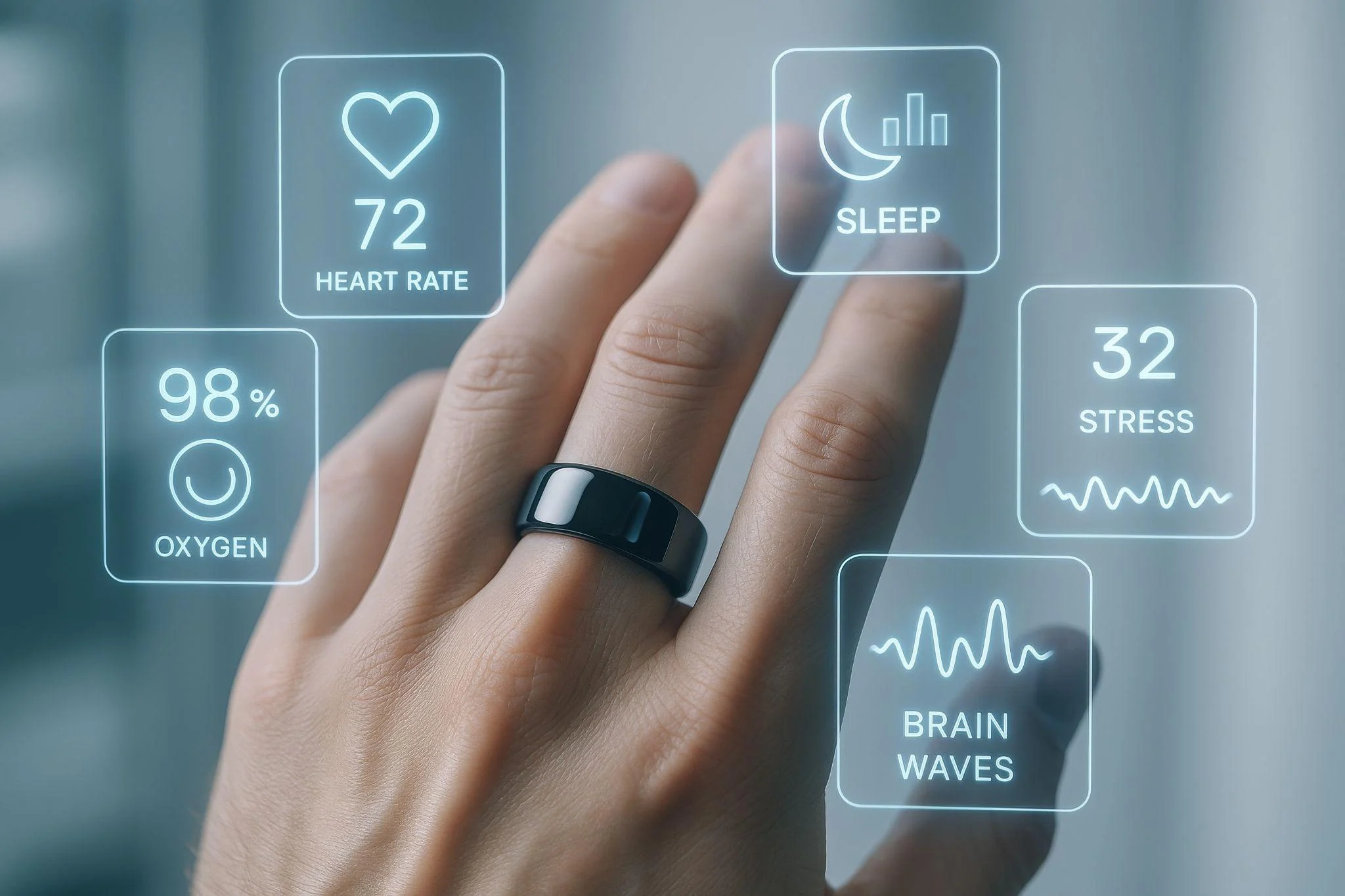
The Physiologic Narrative: How Wearable Biometrics Map Endocrine and Metabolic Health
Heart rate variability (HRV), sleep architecture, glucose variability, and activity patterns function as continuous markers of systems-level regulation, reflecting coordinated endocrine, metabolic, autonomic, circadian, and mitochondrial function, capturing how these systems dynamically coordinate energy allocation, stress adaptation, and homeostasis over time, rather than isolated behaviors or symptoms.
Individually, each measure provides limited clinical insight. Interpreted collectively, however, they reveal dynamic patterns of hormonal signaling, metabolic flexibility, inflammatory tone, and neuroendocrine resilience—often uncovering compensatory responses and physiologic strain years before abnormalities emerge on standard laboratory testing.
This integrative perspective is increasingly valuable as rates of metabolic syndrome, type 2 diabetes, mood disorders, autoimmune disease, and stress-related conditions continue to rise. These conditions are now understood less as discrete pathologies and more as interconnected manifestations of systemic dysregulation, in which disruption in one domain propagates across tightly coupled biological systems.
A growing body of research demonstrates that HRV, sleep structure, glucose dynamics, and activity patterns correlate closely with insulin sensitivity, HPA-axis activity, circadian stability, immune signaling, and mitochondrial function in both male and female patients (1-2). Together, these indicators reveal the deep interdependence of metabolic, hormonal, and overall health.
By contextualizing endocrine and metabolic profiles within these continuous physiologic signals, clinicians can utilize a systems-level framework for early detection, precision assessment, and personalized intervention—advancing preventive care and overall health.
Metabolic-Hormonal-Mental Health Interconnections: A Systems Perspective
This interdependence reflects a fundamental principle of human physiology: the nervous, endocrine, immune, and metabolic systems co-regulate energy allocation, stress adaptation, and survival priorities through shared signaling networks.
Metabolic, hormonal, and mental health are governed by overlapping regulatory systems, including the autonomic nervous system (ANS), hypothalamic-pituitary-adrenal (HPA) axis, circadian clocks, mitochondrial energetics, and immune signaling. Hormones such as insulin, cortisol, thyroid hormones, sex steroids, leptin, ghrelin, and catecholamines serve as bidirectional messengers, translating metabolic state into brain function, mood regulation, cognition, and behavior.
Large-scale reviews and population studies underscore these connections. A comprehensive 2024 highlighted strong associations among diabetes, metabolic syndrome, and mental health conditions, including bipolar disorder, schizophrenia, and obsessive-compulsive disorder (3). Research shows that many of these conditions share upstream drivers, including autonomic dysregulation, chronic inflammation, circadian disruption, and mitochondrial dysfunction. (4).
Hormonal dysregulation further compounds this bidirectional risk. Large-scale clinical data demonstrate distinct hormonal and inflammatory signatures across mood states in bipolar disorder, reinforcing the role of endocrine-immune interactions in psychiatric illness (5). Collectively, these findings position health disorders as systemic conditions, not siloed pathologies.
Wearable biometrics capture the downstream expression of these shared regulatory networks continuously, providing actionable insight into adaptive capacity, early physiologic deviation, and disease trajectory long before overt pathology emerges.
Mitochondria: The Hub of Physiologic Resilience
Mitochondria regulate ATP production, redox balance, immune signaling, apoptosis, and stress adaptation, positioning them as a key integrator linking psychological experience, endocrine function, and metabolism (1). As a result, mitochondrial function represents a unifying substrate through which psychological stress translates into physiologic disease risk.
HRV, sleep quality, glucose stability, and activity patterns all partially reflect mitochondrial resilience. High HRV and stable glucose indicate efficient energy utilization, whereas sleep disruption and inactivity impair mitochondrial repair and turnover. Importantly, these processes are modifiable, underscoring the therapeutic potential of early, systems-based intervention.
Heart Rate Variability: Autonomic & Metabolic Insight
Heart rate variability (HRV) reflects beat-to-beat variation in cardiac intervals and is a sensitive indicator of autonomic nervous system balance and flexibility. It represents the dynamic interplay between sympathetic and parasympathetic (vagal) activity and serves as a functional readout of neuroendocrine and metabolic regulation.
High HRV is associated with robust vagal tone, physiologic adaptability, efficient stress recovery, and metabolic flexibility. Low HRV reflects sympathetic dominance, autonomic rigidity, and elevated allostatic load—states linked to chronic stress, insulin resistance, inflammation, cardiovascular disease, and mood disorders (6-7).
The clinical relevance of HRV extends far beyond stress metrics. Autonomic imbalance is now implicated in a wide range of conditions, including depression, autoimmune disease, chronic fatigue syndromes, post-viral syndromes, and cardiometabolic dysfunction (8). Neurocognitive studies further demonstrate that reduced HRV correlates with impaired inhibitory control, slowed reaction time, and depressive symptomatology, reinforcing its role as a marker of brain-body integration (9).
At a mechanistic level, HRV is tightly linked to mitochondrial function. Mitochondria modulate neuroendocrine, metabolic, inflammatory, and transcriptional responses to stress; chronic stress increases mitochondrial allostatic load, reducing energy efficiency and adaptive capacity (1). These mitochondrial changes manifest downstream as reduced HRV, impaired glucose regulation, and disrupted sleep—illustrating the deep interconnection between bioenergetics and autonomic health.
Endocrine & Metabolic Links – HRV is intimately connected to endocrine signaling. Vagal activity modulates insulin secretion, glucose uptake, lipid metabolism, inflammatory tone, and mitochondrial efficiency. Conversely, hormones (including cortisol, thyroid hormones, insulin, catecholamines, and sex steroids) directly influence autonomic tone, creating a bidirectional regulatory loop between HRV and hormonal balance.
Population-based studies such as MIDUS II demonstrate that reduced HRV correlates with metabolic syndrome, insulin resistance, and cardiometabolic risk, particularly when combined with poor sleep quality (6). Importantly, emerging data show that nocturnal HRV fluctuations are closely correlated with glucose variability during sleep, highlighting direct coupling between autonomic and metabolic regulation (10). Sleep, therefore, represents a profound convergence point at which autonomic, metabolic, and endocrine processes synchronize.
Sex-Specific Considerations – Absolute HRV values differ between men and women due to cardiac size, baseline autonomic tone, and hormonal milieu. Estrogen exerts a vagotonic effect, buffering autonomic decline in premenopausal women, while men demonstrate stronger associations between sympathetic dominance, visceral adiposity, insulin resistance, and HPA-axis hyperactivity. Menstrual cycle phase further modulates autonomic regulation and sleep architecture, underscoring the importance of sex-specific interpretation (11). Despite these differences, the directionality of HRV associations with metabolic, endocrine, and mental health outcomes is consistent across sexes.
Sleep Architecture & Endocrine Reset
Sleep is a primary regulator of hormonal homeostasis, autonomic recalibration, and metabolic repair. Beyond duration, sleep architecture—the distribution and continuity of REM and non-REM sleep—coordinates circadian rhythms with endocrine signaling. Sleep architecture thus acts as a nightly recalibration mechanism for neuroendocrine and metabolic control systems.
Disrupted sleep architecture alters cortisol rhythmicity, suppresses growth hormone secretion, impairs leptin-ghrelin balance, and reduces insulin sensitivity, collectively promoting glucose variability, visceral adiposity, inflammation, and mood instability (12-13). In men, sleep apnea is associated with altered lipid metabolism, impaired glucose tolerance, and increased body fat percentage, further illustrating sleep’s endocrine-metabolic significance (14). These effects compound over time, accelerating metabolic and neuropsychiatric vulnerability when sleep disruption becomes chronic.
Importantly, cognitive and emotional consequences of insomnia may precede measurable metabolic or autonomic abnormalities, positioning sleep metrics as early warning indicators of systemic strain (15). In this sense, sleep disruption may represent one of the earliest detectable manifestations of system overload. Poor sleep can also further contribute to compromised gut microbiome and hormonal imbalances.
Glucose Variability & Neuroendocrine Stress
Glucose variability reflects metabolic adaptability and neuroendocrine stress responsiveness beyond fasting glucose or HbA1c. Frequent excursions signal impaired insulin signaling, heightened sympathetic activity, and mitochondrial inefficiency. From a systems standpoint, glucose variability reflects the nervous system’s capacity to regulate energy availability under stress.
Glucose regulation is tightly coupled to the HPA axis and autonomic tone. Early glucose instability can appear in patients without overt diabetes but with high physiological or psychological stress burden. Improvements in glucose biomarkers often parallel reductions in depressive symptoms, emphasizing shared metabolic-mental health pathways (16).
Activity Patterns & Hormonal Regulation
Physical activity is a potent regulator of insulin sensitivity, mitochondrial biogenesis, inflammation, neurotransmitter balance, and circadian alignment. Wearable metrics allow assessment of pattern, timing, recovery, and consistency, which carry hormonal significance. Activity patterns, therefore, serve as both an input into—and an output of—metabolic and autonomic regulation.
Regular, circadian-aligned movement enhances glucose uptake, leptin sensitivity, vagal tone, and mitochondrial efficiency. In contrast, sedentary behavior independently predicts insulin resistance and cardiometabolic risk (1-2). Sex-specific responses persist: women may be more sensitive to sleep-exercise misalignment, while men show stronger associations between inactivity, visceral adiposity, and insulin resistance. Nonetheless, activity-driven improvements in HRV, glucose stability, and metabolic flexibility are observed across sexes. These findings reinforce movement consistency, rather than intensity alone, as a key determinant of metabolic resilience.
Biometrics in Predictive Health
Continuous measures of HRV, sleep architecture, glucose variability, and activity patterns, combined with artificial intelligence and systems biology, can shift care from reactive to preventive. These biomarkers detect early physiologic deviations before conventional clinical thresholds are crossed (17).
By capturing system-level signals of metabolic, endocrine, autonomic, and circadian function, clinicians can intercept risk, optimize resilience, and personalize interventions, making continuous biometrics a cornerstone of predictive, preventive, and precision health.
Clinical Implications: A Unified Mind-Body Framework
Collectively, the evidence supports conceptualizing metabolic, hormonal, and mental disorders as interconnected manifestations of system-level dysregulation across neuroendocrine, autonomic, immune, mitochondrial, and circadian domains. Operationalizing this framework requires clinicians to shift from siloed interpretation toward pattern recognition across time, systems, and contexts. Clinicians can apply several actionable principles:
- Interpret biometrics relationally, not in isolation
- Target sleep and autonomic regulation simultaneously to reduce metabolic risk
- Address glucose variability as a neuroendocrine signal, not merely a metabolic outcome
- Leverage activity patterns to restore hormonal and mitochondrial resilience
- Recognize sex-specific trajectories while attending to shared mechanisms
Health Intelligence
HRV, sleep architecture, glucose variability, and activity patterns are real-time physiologic narratives. When integrated with laboratory diagnostics, they reveal how an individual adapts to stress, regulates energy, and maintains homeostasis over time.
Nutrition, circadian rhythm, and stress-management practices optimize these measures, while body-mind attunement (through mindfulness, breathing, or interoception) supports autonomic and hormonal balance. Together, these lifestyle inputs enhance resilience and the preventive potential of Health Intelligence.
This systems-based approach supports predictive, preventive, and personalized care across physical and mental health domains.
Upcoming Webinar
In an era of precision and functional medicine, isolated lab values offer only snapshots of physiology. Continuous, real-world biometrics provide deeper clinical insight by revealing how patients sleep, recover, respond to stress, and adapt over time.
PLMI, in collaboration with Biocanic, presents Health Intelligence: Improving Outcomes Through Wearables and Clinical Biometrics on February 3, 2026 (5-7 PM). This webinar translates science into practical, clinic-ready application.
Hosted by Dr. Michelle Leary, with experts Dr. Tracy Gapin and Dr. Bridgett Briggs, this session will demonstrate how HRV, sleep architecture, glucose variability, and activity patterns can contextualize hormone panels, metabolic markers, and stress physiology. Through real-world case studies, clinicians will learn to identify early signs of physiologic dysregulation, enabling more effective interventions to promote balance, resilience, and vitality.
References
- Picard M, McManus MJ, Gray JD, Nasca C, Moffat C, Kopinski PK, Seifert EL, McEwen BS, Wallace DC. Mitochondrial functions modulate neuroendocrine, metabolic, inflammatory, and transcriptional responses to acute psychological stress. Proc Natl Acad Sci U S A. 2015 Dec 1;112(48):E6614-23. doi: 10.1073/pnas.1515733112. Epub 2015 Nov 16. PMID: 26627253; PMCID: PMC4672794.
- Kumagai K, Chiba A, Yajima H. Design biology and mind-body health. J Genet Eng Biotechnol. 2025 Dec;23(4):100621. doi: 10.1016/j.jgeb.2025.100621. Epub 2025 Nov 29. PMID: 41386887; PMCID: PMC12704385.
- Cannon A, Jacoby C, Hughes AS. Mind in Metabolism – A Comprehensive Literature Review on Diabetes and its Connections to Obsessive Compulsive Disorder, Schizophrenia, and Bipolar Disorder. Curr Diab Rep. 2024 Dec 9;25(1):10. doi: 10.1007/s11892-024-01564-0. PMID: 39652222; PMCID: PMC11628432
- Limon VM, Lee M, Gonzalez B, Choh AC, Czerwinski SA. The impact of metabolic syndrome on mental health-related quality of life and depressive symptoms. Qual Life Res. 2020 Aug;29(8):2063-2072. doi: 10.1007/s11136-020-02479-5. Epub 2020 Mar 25. PMID: 32215841; PMCID: PMC7513573.
- Lyu N, Zhao Q, Fu B, Li J, Wang H, Yang F, Liu S, Huang J, Zhang X, Zhang L, Li R. Hormonal and inflammatory signatures of different mood episodes in bipolar disorder: a large-scale clinical study. BMC Psychiatry. 2023 Jun 20;23(1):449. doi: 10.1186/s12888-023-04846-1. PMID: 37340368; PMCID: PMC10283309.
- Nevels TL, Wirth MD, Ginsberg JP, McLain AC, Burch JB. The role of sleep and heart rate variability in metabolic syndrome: evidence from the Midlife in the United States study. Sleep. 2023 May 10;46(5):zsad013. doi: 10.1093/sleep/zsad013. PMID: 36727300; PMCID: PMC10171632.
- Sgoifo A, Carnevali L, Alfonso Mde L, Amore M. Autonomic dysfunction and heart rate variability in depression. 2015;18(3):343-52. doi: 10.3109/10253890.2015.1045868. Epub 2015 May 25. PMID: 26004818.
- Malkova AM, Shoenfeld Y. Autoimmune autonomic nervous system imbalance and conditions: Chronic fatigue syndrome, fibromyalgia, silicone breast implants, COVID and post-COVID syndrome, sick building syndrome, post-orthostatic tachycardia syndrome, autoimmune diseases and autoimmune/inflammatory syndrome induced by adjuvants. Autoimmun Rev. 2023 Jan;22(1):103230. doi: 10.1016/j.autrev.2022.103230. Epub 2022 Nov 5. PMID: 36347462.
- Hsu CC, Chen TY, Ou H, Kuo TBJ, Yang CCH. Interactions Between Depression, Autonomic Dysfunction, Inhibitory Control and Reaction Time: Insights From Heart Rate Variability During Continuous Performance Test. Psychiatry Investig. 2025 Aug;22(8):921-929. doi: 10.30773/pi.2025.0043. Epub 2025 Aug 5. PMID: 40754941; PMCID: PMC12370436.
- Kajisa T, Kuroi T, Hara H, Sakai T. Correlation analysis of heart rate variations and glucose fluctuations during sleep. Sleep Med. 2024 Jan;113:180-187. doi: 10.1016/j.sleep.2023.11.038. Epub 2023 Nov 28. PMID: 38042028.
- de Zambotti M, Nicholas CL, Colrain IM, Trinder JA, Baker FC. Autonomic regulation across phases of the menstrual cycle and sleep stages in women with premenstrual syndrome and healthy controls. 2013 Nov;38(11):2618-27. doi:
- Feng N, Yang J, Xu H, Zhang C, Wang F, Wu X, Gu M. The Associations Between Sleep Architecture and Metabolic Parameters in Patients With Obstructive Sleep Apnea: A Hospital-Based Cohort Study. Front Neurol. 2021 Feb 10;12:606031. doi: 10.3389/fneur.2021.606031. PMID: 33658975; PMCID: PMC7919522.
- Jiao Y, Butoyi C, Zhang Q, Intchasso Adotey SAA, Chen M, Shen W, Wang D, Yuan G, Jia J. Sleep disorders impact hormonal regulation: unravelling the relationship among sleep disorders, hormones and metabolic diseases. Diabetol Metab Syndr. 2025 Aug 1;17(1):305. doi: 10.1186/s13098-025-01871-w. PMID: 40750881; PMCID: PMC12315459.
- Kamble PG, Theorell-Haglöw J, Wiklund U, Franklin KA, Hammar U, Lindberg E, Eriksson JW. Sleep apnea in men is associated with altered lipid metabolism, glucose tolerance, insulin sensitivity, and body fat percentage. Endocrine. 2020 Oct;70(1):48-57. doi: 10.1007/s12020-020-02369-3. Epub 2020 Jun 19. PMID: 32562183; PMCID: PMC7524823.
- Dhanusri B, Rajalakshmi R, Prakash P, Bharadwaj B, Kt H. Insomnia and Its Impact on Psychomotor Reactivity, Autonomic Function, and Psychological Well-Being Among Medical Students: A Cross-Sectional Analytical Study. 2025 Nov 11;17(11):e96619. doi: 10.7759/cureus.96619. PMID: 41393661; PMCID: PMC12698876.
- Silver D, Vasileiadi M, Stewart MS, Rabin JS, Giacobbe P, Goubran M, Swardfager W, Lipsman N, Nestor SM. Glucose biomarkers and antidepressant response: A scoping review of interventions targeting major depressive disorder and metabolic dysfunction. J Affect Disord. 2026 Feb 15;395(Pt A):120606. doi: 10.1016/j.jad.2025.120606. Epub 2025 Nov 12. PMID: 41237959.
- Boschiero D, Gallotta A, Ferrari F, Dragoumani K, Lamprou G, Vlachakis D, Chrousos GP. Predictive health index: integrating body composition and heart rate variability metrics with artificial intelligence to predict chronic disease risk and specific chronic non-communicable diseases. Hormones (Athens). 2025 Dec 8. doi: 10.1007/s42000-025-00727-2. Epub ahead of print. PMID: 41359153.