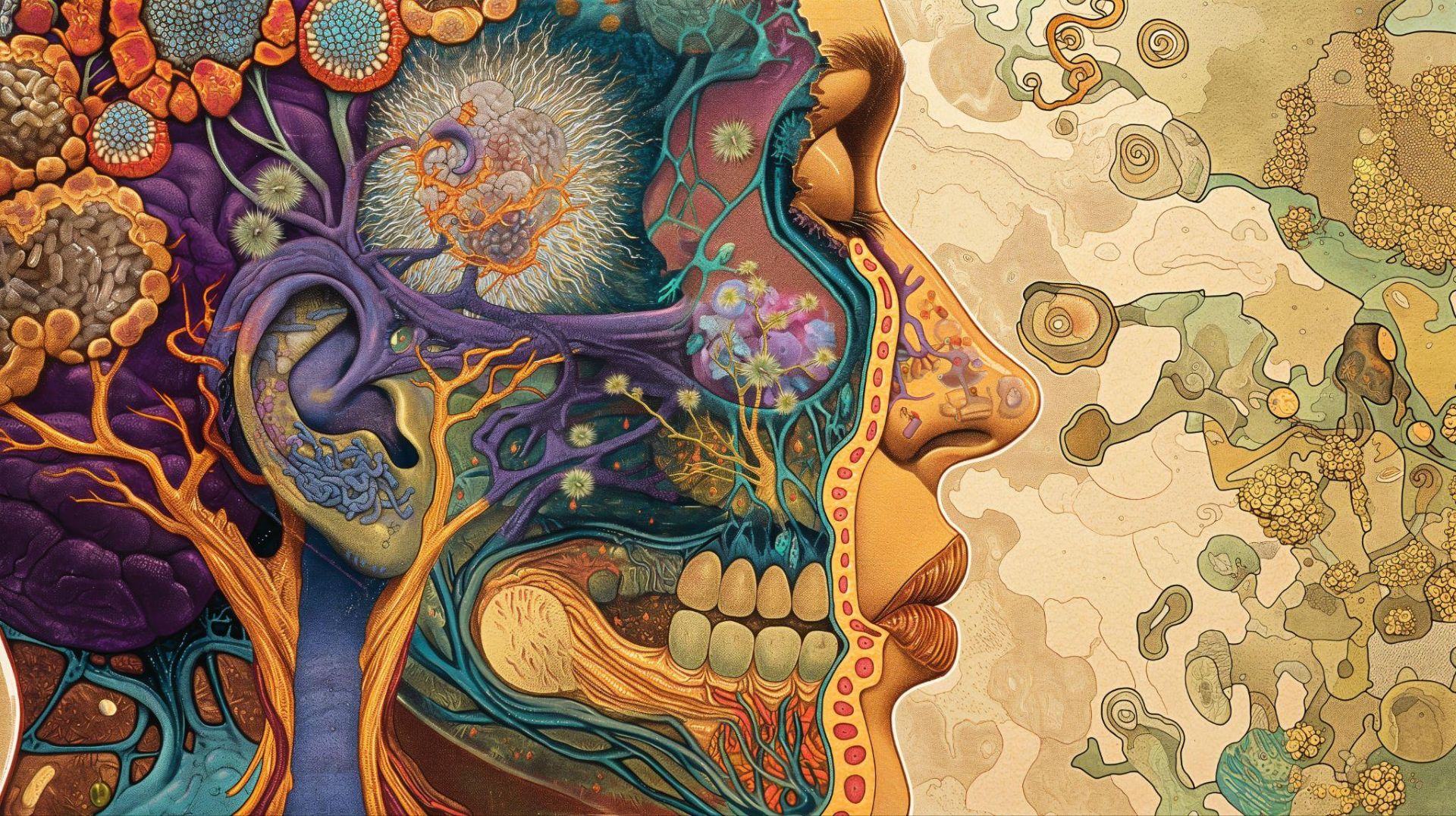
Environmental & Physiological Triggers that Drive Immune Burden
Autoimmune and immune-mediated diseases are rising faster than genetics alone can explain. Over 15% of the U.S. population now has at least one autoimmune diagnosis (1). Immune dysregulation often co-occurs with depression, anxiety, metabolic disease, and chronic inflammatory disorders, reflecting the interplay of immune, endocrine, neural, and metabolic systems (2-3).
These clusters point to a shared upstream failure in immune regulation. Immune tolerance (the ability to distinguish self from non-self) erodes under cumulative physiological and environmental load. Dysregulation reflects miscommunication across regulatory networks, not weakness of the immune system.
IMMUNE BURDEN: MECHANISMS & CONSEQUENCES
Immune burden refers to the cumulative antigenic, metabolic, toxic, and psychological load the immune system encounters daily. When burden exceeds regulatory capacity, tolerance fails, leading to misdirected immune responses, autoimmunity, and chronic inflammation.
From a functional medicine perspective, immune dysregulation can be conceptualized as:
- Antecedents: Genetic susceptibility, immunosenescence
- Triggers: Acute or repeated insults, including infections, toxins, trauma, or dietary exposures
- Mediators: Chronic stress, metabolic dysregulation, sleep disruption, circadian misalignment, nutrient insufficiency
Clinical strategies aim to reduce total immune burden and restore regulatory control.
Cumulative antigen exposure reshapes T-cell repertoires, expanding memory clones and narrowing naïve diversity, which reduces adaptive flexibility and increases the risk of autoreactivity—highlighting how sustained environmental and physiological load can erode immune tolerance (3).
Stress Physiology as an Upstream Driver
The immune system is tightly regulated by neural and endocrine inputs. Chronic psychological stress, trauma, and circadian disruption reshape hypothalamic signaling, driving immune miscommunication and increasing overall immune burden.
HPA-HPT Crosstalk
Repeated activation of the hypothalamic-pituitary-adrenal (HPA) axis initially elevates cortisol to support acute stress adaptation. Over time, chronic stress dysregulates glucocorticoid signaling, uncouples negative feedback, and shifts hypothalamic set points. These alterations compromise neuroendocrine-immune communication, priming the immune system toward persistent proinflammatory signaling.
At the same time, bidirectional crosstalk with the hypothalamic-pituitary-thyroid (HPT) axis alters metabolic signaling in immune cells. Chronic cortisol exposure can suppress thyrotropin-releasing hormone (TRH) and reduce peripheral conversion of T4 to T3, diminishing cellular metabolic capacity. Because immune cells are energetically demanding, even subtle shifts in thyroid hormone availability can impair leukocyte activation, cytokine regulation, and timely resolution of inflammation.
Pituitary-Immune Feedback
The pituitary is an immunologically responsive organ. Cytokines such as IL-1β and TNF-α influence pituitary hormone secretion, while pituitary-derived hormones reciprocally regulate leukocyte trafficking, inflammatory tone, and systemic immune activity. This positions the pituitary as a key node linking stress physiology with immune regulation and chronic inflammatory states (4).
Cytokine Skewing
Sustained cortisol exposure can diminish regulatory T-cell (Treg) function and shift immune signaling toward a pro-inflammatory profile, including elevated IL-6, TNF-α, and IL-1β. Chronic glucocorticoid signaling may promote receptor desensitization, weakening cortisol’s anti-inflammatory effects and permitting persistent inflammatory activity. Thyroid hormone dysregulation further amplifies inflammation by altering mitochondrial energy production and metabolic signaling in immune cells (5).
Sleep & Circadian Disruption
Altered sleep-wake cycles impair glymphatic and lymphatic clearance, disrupt endothelial function, and favor pro-inflammatory cytokine profiles (6). Circadian biology research demonstrates that innate immune cell trafficking, cytokine production, and microbial metabolite signaling follow diurnal oscillations. Disruption of host-microbiome circadian synchrony alters microbial composition and short-chain fatty acid production, shifting immune tone toward inflammatory dominance (7). Circadian misalignment, therefore, destabilizes both cortisol rhythms and microbiome-immune cross-talk.
Trauma & Epigenetic Imprinting
Adverse childhood experiences and chronic stress create long-term immune dysregulation through epigenetic modification of stress-immune signaling pathways, further compounding immunity (8).
Mental Health & Immune Dysregulation
Rates of depression and anxiety have risen sharply in recent decades, with many patients experiencing treatment-resistant symptoms. Beyond psychiatric manifestations, these conditions increase risk for suicide, cardiovascular disease, chronic pain, and fatigue. Neuroinflammation, immune dysregulation, and HPA axis dysfunction contribute to their pathophysiology and often interact bidirectionally with stress (2).
Dysregulated cytokine activity and altered neurotransmitter signaling create a feedback loop between the immune and central nervous systems. Proinflammatory cytokines, such as IL-6 and TNF-α, activate indoleamine 2,3-dioxygenase (IDO), diverting tryptophan from serotonin synthesis toward kynurenine metabolites with neurotoxic effects.
This mechanistic bridge further reinforces the immune-mood connection.
Interface Breakdown: Gut & Barrier Systems
When regulatory signaling falters, environmental interfaces become vulnerable.
GI Tract – The gut houses the majority of immune tissue. Barrier disruption increases antigen exposure to dendritic cells, shifts T-cell differentiation toward Th17 with elevated IL-17, and lowers secretory IgA. Dysbiosis amplifies systemic inflammation, while poorly tolerated foods and bacterial lipopolysaccharides act as repeated inflammatory triggers (9).
Th17 expansion is particularly relevant in autoimmune pathogenesis, as IL-17 promotes neutrophil recruitment and tissue inflammation (9).
Extra-Gut Barriers – Nasal, pulmonary, oral, genitourinary, and skin mucosae also regulate antigen exposure. Chronic irritation, dryness, or inflammation increases mast cell activation and perpetuates skewed immune responses.
Microbiome Crosstalk – The gut-brain-immune, gut-liver, gut-kidney, gut-joint, and gut-cardiovascular axes illustrate how microbial imbalance influences systemic immune tone. Microbial metabolites—including short-chain fatty acids and trimethylamine—modulate regulatory T-cell differentiation, endothelial function, and hepatic inflammatory signaling, highlighting how local dysbiosis affects distal tissues.
Metabolic Drivers of Immune Dysregulation
Chronic exposures shape immune memory and promote low-grade inflammation:
- Processed Foods: Excess refined carbohydrates and industrial fats recruit macrophages to visceral adipose tissue and bias adaptive immune cells toward proinflammatory phenotypes (10).
- Blood Glucose & TMAO: Glycemic spikes impair immune competence, promote cytokine release, and elevate trimethylamine N-oxide (TMAO), linking gut metabolism to cardiovascular and neurodegenerative inflammation. Western diets, high-fat meals, sleep deprivation, and vitamin D deficiency can increase TMAO levels.
- Chronic Metabolic Stress: Persistent metabolic inputs teach immune cells to respond defensively, eroding regulatory T-cell control and systemic tolerance. Metabolic endotoxemia, characterized by low-grade translocation of lipopolysaccharide (LPS), further reinforces innate immune priming, creating a loop between adipose tissue inflammation, insulin resistance, and adaptive immune activation.
Environmental & Hormonal Disruptors
Toxins – Solvents, metals, pesticides, and particulates function as danger signals that modify host proteins, expose neo-epitopes, and overwhelm detoxification systems (11). Heavy metals (including mercury, cadmium, arsenic, and lead) can promote autoimmunity through oxidative stress induction, epigenetic modification of immune-related genes, disruption of central tolerance, and molecular mimicry (11). Research highlights how environmental toxicants interact with hormonal signaling and immune regulation, contributing to autoimmune susceptibility.
Microplastics – Microplastics and nanoplastics are emerging as immunologically active contaminants. A 2025 immunology review reports that these particles cross epithelial barriers, accumulate in tissues, and directly engage innate immune cells (12). Experimental models demonstrate ROS generation, NLRP3 inflammasome activation, macrophage polarization shifts, and gut barrier disruption. They may also act as carriers for adsorbed toxins and endocrine disruptors, increasing inflammatory signaling.
Airborne particulates and persistent organic pollutants similarly act as adjuvant-like stimuli, enhancing antigen presentation and lowering activation thresholds for autoreactive lymphocytes. Chronic low-dose exposure may shift immune tone from tolerance toward sustained activation.
Hormonal Shifts – Estrogen, progesterone, thyroid hormones, insulin, and vitamin D modulate macrophage polarization, cytokine production, and Treg competency. Dysregulation can increase autoimmune activation and flare propensity.
Nutrient Insufficiency – Vitamin D, zinc, magnesium, omega-3s, and phytonutrients are essential for barrier integrity, antioxidant defense, and immune regulation. Deficiencies can impair both innate and adaptive immunity by weakening epithelial barriers, reducing antibody production, and dysregulating inflammatory cytokines, compounding overall immune burden (13).
Aging – With aging, cumulative antigen exposure drives expansion of memory T-cell clones and macrophage activation, leading to persistent low-grade inflammation, or inflamm-aging. This shift reflects declining immune tolerance and contributes to autoimmunity, metabolic disease, and neurodegeneration (3).
REDUCING BURDEN & RETRAINING IMMUNITY
Functional medicine prioritizes restoration over suppression, recalibrating immune signaling, barrier integrity, and tolerance mechanisms. Rather than targeting a single inflammatory pathway, the goal is to reduce cumulative immune burden while restoring the regulatory systems that maintain balance.
Sleep, activity, nutrition, and environment form foundational pillars for rebuilding immune resilience and recalibrating inflammatory tone.
Mind-Body Interventions
Yoga, controlled breathing, mindfulness, and meditation enhance parasympathetic tone, HPA axis regulation, and anti-inflammatory signaling (2, 6). Nature exposure complements these effects (14).
Research shows that yoga attenuates exercise-induced immunosuppression and improves markers of immune resilience following physiologic stress, supporting its role in modulating inflammatory recovery dynamics (15).
These effects are partially mediated through vagal activation. The vagus nerve exerts an anti-inflammatory influence via the cholinergic anti-inflammatory pathway, inhibiting excessive cytokine release. Clinical reviews of vagus nerve stimulation (VNS) describe its capacity to reduce TNF-α and other inflammatory mediators in immune-mediated diseases (16).
Breathwork, meditation, and yoga enhance vagal tone, offering practical strategies to engage this neuroimmune regulatory circuit.
Sleep & Circadian Rhythm
Adequate sleep supports glymphatic and lymphatic clearance, immune memory stabilization, barrier integrity, and circadian alignment. Consistent sleep schedules, light exposure, and circadian-aligned meals optimize immune-metabolic coordination (17-19).
Nutrition & Metabolic Support
Diets rich in fiber, polyphenols, cruciferous vegetables, protein, and healthy fats, along with micronutrient adequacy, stabilize blood glucose, reduce TMAO, and promote regulatory immune signaling. Limiting ultra-processed foods minimizes proinflammatory memory (8).
Botanicals
Shiitake mushroom extract modulates immune responses and reduces oxidative stress. Extracts of Lentinus edodes contain bioactive polysaccharides and phenolics that support antimicrobial and immunomodulatory activity, with beta-glucans influencing macrophage and dendritic cell function (20).
Black cumin seed extract (Nigella sativa) supports innate and adaptive immunity and enhances antioxidant defenses. Thymoquinone and related compounds possess antimicrobial, anti-inflammatory, and immunomodulatory effects, modulating cytokine balance and oxidative stress pathways (21).
Movement
Exercise improves mitochondrial efficiency, expands regulatory T-cell populations, enhances insulin sensitivity, and supports lymphatic function, recalibrating immune memory (2-3).
Restoring Systemic Coherence
Effective immune intervention reduces total burden while restoring coordinated signaling across innate, adaptive, and regulatory networks. Recalibration retrains immune memory to distinguish self from non-self, threat from adaptation, and repair from pathology.
A systems-based approach focuses on upstream repair: strengthening gut and mucosal barriers; stabilizing metabolic and mitochondrial signaling; realigning circadian biology; regulating HPA-HPT axis stress physiology; reducing cumulative toxic load.
When coherence is restored across neural, endocrine, metabolic, microbial, and immune networks, inflammatory tone settles and regulatory pathways regain dominance. Restoration—not suppression—becomes the central principle of durable immune health across the lifespan.
Clinical Application
These concepts will be explored in greater depth during the webinar Decoding the Immune System: Tolerance, Triggers, and Targeted Care on April 7. Ari Vojdani, PhD, Elroy Vojdani, MD, and Robyn Puglia, Nutritional Therapist & IFMCP, will cover immune tolerance as a regulatory process, the cumulative factors that contribute to immune burden, and practical strategies clinicians can use to support immune restoration. For practitioners seeking deeper mechanistic insight, a Deep Dive course will also be offered, providing expanded conceptual grounding in systems biology approaches to immunity.
References
- Abend AH, He I, Bahroos N, Christianakis S, Crew AB, Wise LM, Lipori GP, He X, Murphy SN, Herrick CD, Avasarala J, Weiner MG, Zelko JS, Matute-Arcos E, Abajian M, Payne PR, Lai AM, Davis HA, Hoberg AA, Ortman CE, Gode AD, Taylor BW, Osinski KI, Di Florio DN, Rose NR, Miller FW, Tsokos GC, Fairweather D. (2024). Estimation of prevalence of autoimmune diseases in the United States using electronic health record data. J Clin Invest, 135(4), e178722. https://doi.org/10.1172/JCI178722
- Hole C, Dhamsania A, Brown C, Ryznar R. Immune Dysregulation in Depression and Anxiety: A Review of the Immune Response in Disease and Treatment. Cells. 2025 Apr 17;14(8):607. doi: 10.3390/cells14080607. PMID: 40277932; PMCID: PMC12025721.
- Liu Z, Liang Q, Ren Y, Guo C, Ge X, Wang L, Cheng Q, Luo P, Zhang Y, Han X. Immunosenescence: molecular mechanisms and diseases. Signal Transduct Target Ther. 2023 May 13;8(1):200. doi: 10.1038/s41392-023-01451-2. PMID: 37179335; PMCID: PMC10182360.
- Li Q. Pituitary-immune bidirectional crosstalk under systemic inflammation. PLoS Biol. 2023 Dec 19;21(12):e3002440. doi: 10.1371/journal.pbio.3002440. PMID: 38113236; PMCID: PMC10729977.
- Alotiby A. Immunology of Stress: A Review Article. J Clin Med. 2024 Oct 25;13(21):6394. doi: 10.3390/jcm13216394. PMID: 39518533; PMCID: PMC11546738.
- Jerigova V, Zeman M, Okuliarova M. Circadian Disruption and Consequences on Innate Immunity and Inflammatory Response. Int J Mol Sci. 2022 Nov 8;23(22):13722. doi: 10.3390/ijms232213722. PMID: 36430199; PMCID: PMC9690954.
- Butler TD, Gibbs JE. Circadian Host-Microbiome Interactions in Immunity. Front Immunol. 2020 Aug 14;11:1783. doi: 10.3389/fimmu.2020.01783. PMID: 32922391; PMCID: PMC7456996.
- Kiecolt-Glaser, J. K., McGuire, L., Robles, T. F., & Glaser, R. (2002). Psychoneuroimmunology: Psychological influences on immune function and health. Journal of Consulting and Clinical Psychology, 70(3), 537–547. https://doi.org/10.1037/0022-006X.70.3.537
- Guodong W, Yinhang W, Xinyue W, Hong S, Jian C, Zhanbo Q, Shuwen H. Fecal occult blood affects intestinal microbial community structure in colorectal cancer. BMC Microbiol. 2025 Jan 20;25(1):34. doi: 10.1186/s12866-024-03721-7. PMID: 39833681; PMCID: PMC11745023.
- Godsey TJ, Eden T, Emerson SR. Ultra-Processed Foods and Metabolic Dysfunction: A Narrative Review of Dietary Processing, Behavioral Drivers and Chronic Disease Risk. Metabolites. 2025 Dec 5;15(12):784. doi: 10.3390/metabo15120784. PMID: 41441026; PMCID: PMC12734455.
- Bjørklund G, Wallace DR, Kangarlou K, Hossain F, Peana M. Environmental toxins and toxic metals in autoimmune diseases: Sex differences, hormonal influences, and immune dysregulation. Autoimmun Rev. 2026 Jan;25(1):103955. doi: 10.1016/j.autrev.2025.103955. Epub 2025 Oct 30. PMID: 41173353.
- Vanetti C, Broggiato M, Pezzana S, Clerici M, Fenizia C. Effects of microplastics on the immune system: How much should we worry? Immunol Lett. 2025 Apr;272:106976. doi: 10.1016/j.imlet.2025.106976. Epub 2025 Feb 1. PMID: 39900298.
- Shakoor H, Feehan J, Al Dhaheri AS, Ali HI, Platat C, Ismail LC, Apostolopoulos V, Stojanovska L. Immune-boosting role of vitamins D, C, E, zinc, selenium and omega-3 fatty acids: Could they help against COVID-19? Maturitas. 2021 Jan;143:1-9. doi: 10.1016/j.maturitas.2020.08.003. Epub 2020 Aug 9. PMID: 33308613; PMCID: PMC7415215.
- Andersen L, Corazon SSS, Stigsdotter UKK. Nature Exposure and Its Effects on Immune System Functioning: A Systematic Review. Int J Environ Res Public Health. 2021 Feb 3;18(4):1416. doi: 10.3390/ijerph18041416. PMID: 33546397; PMCID: PMC7913501.
- Eda N, Tabata H, Sone R, Fukuchi M, Kawai R, Harakuma K, Hirose N, Akama T. Yoga improves immunosuppression after a prolonged intense exercise. Physiol Int. 2025 Mar 4;112(1):85-100. doi: 10.1556/2060.2025.00466. PMID: 40035867.
- Liu J, Zheng K, Dong L, Lin J, Zhang C, Xie Y, Wang Y. Clinical applications and mechanisms of vagus nerve stimulation in the treatment of immune diseases: a review.
- Garbarino S, Lanteri P, Bragazzi NL, Magnavita N, Scoditti E. Role of sleep deprivation in immune-related disease risk and outcomes. Commun Biol. 2021 Nov 18;4(1):1304. doi: 10.1038/s42003-021-02825-4. PMID: 34795404; PMCID: PMC8602722.
- Singh KK, Ghosh S, Bhola A, Verma P, Amist AD, Sharma H, Sachdeva P, Sinha JK. Sleep and Immune System Crosstalk: Implications for Inflammatory Homeostasis and Disease Pathogenesis. Ann Neurosci. 2024 Sep 20;32(3):196-206. doi: 10.1177/09727531241275347. PMID: 39544655; PMCID: PMC11559494.
- Ibarra-Coronado EG, Pantaleón-Martínez AM, Velazquéz-Moctezuma J, Prospéro-García O, Méndez-Díaz M, Pérez-Tapia M, Pavón L, Morales-Montor J. The Bidirectional Relationship between Sleep and Immunity against Infections. J Immunol Res. 2015;2015:678164. doi: 10.1155/2015/678164. Epub 2015 Aug 31. PMID: 26417606; PMCID: PMC4568388.
- Sutthisa W, Kamlangmak P, Srisawad N. Antibacterial Potential and Chemical Composition of Shiitake Mushroom (Lentinus edodes (Berk.) Sing.) Extract Against Pathogenic Bacteria. Scientifica (Cairo). 2025 Dec 18;2025:6089332. doi: 10.1155/sci5/6089332. PMID: 41523615; PMCID: PMC12782324
- Abbas M, Gururani MA, Ali A, Bajwa S, Hassan R, Batool SW, Imam M, Wei D. Antimicrobial Properties and Therapeutic Potential of Bioactive Compounds in