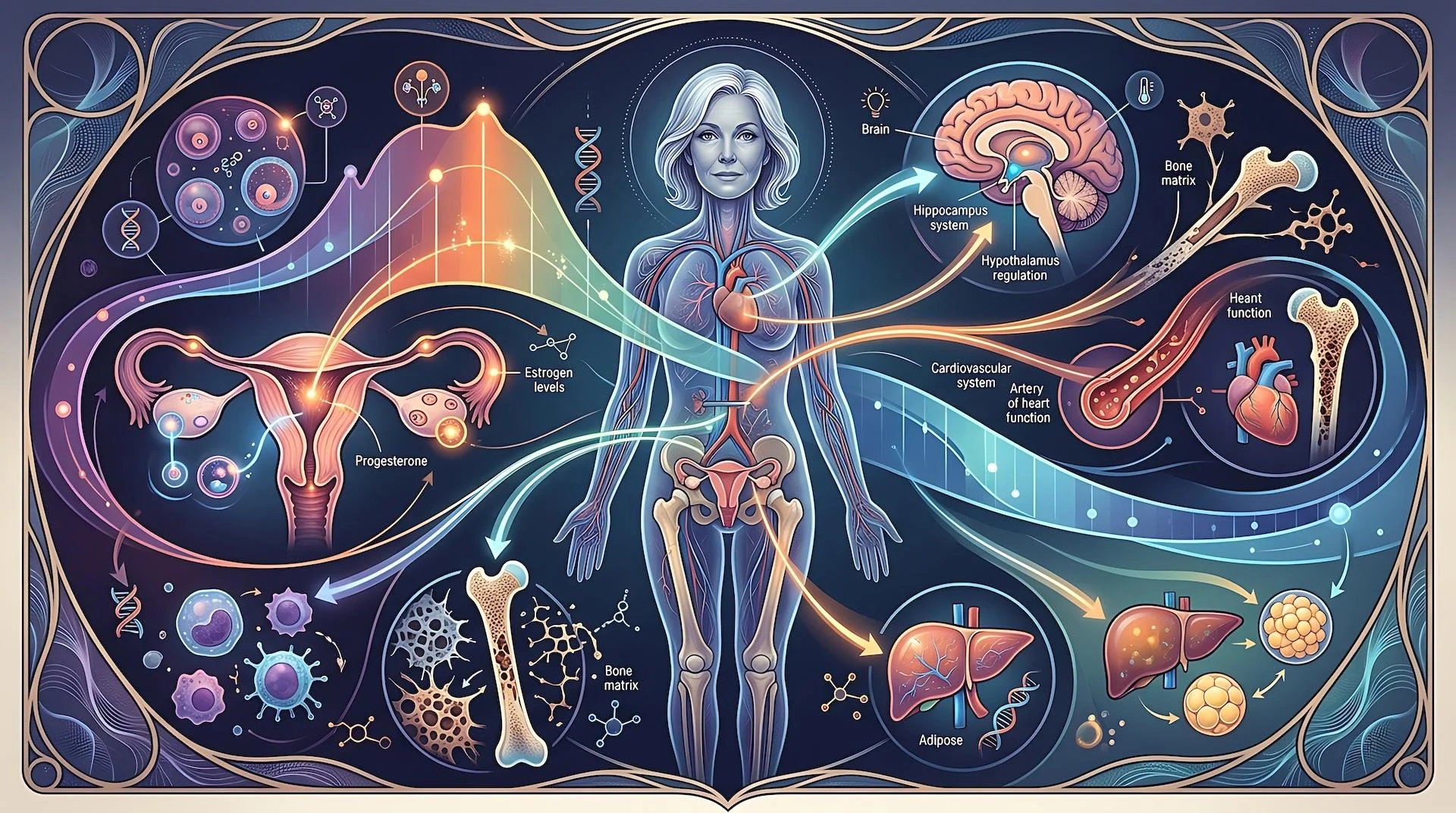

The Network Effect: How Genetic Variants Impact Inflammatory Tone, Antioxidant Defense Capacity, Endocrine Function, & Gut–Environment Interactions
In functional medicine, a clinically useful framework explains that genes load the gun, the environment pulls the trigger, and interacting physiological systems integrate these inputs across inflammatory, metabolic, and regulatory networks.
Most genetic variants do not act independently, and their effects rarely manifest within a single pathway. Instead, they emerge across interconnected systems (immune signaling, antioxidant defense, endocrine regulation, and the gut–microbial host–environment interface) where variation in one domain influences function across others.
From this vantage point, the same genotype can produce different phenotypes depending on environmental context, while targeted changes in inputs can shift outcomes. Health and disease arise from dynamic interactions among genetic predisposition, environmental exposures, and lifestyle behaviors, with epigenetic mechanisms serving as a key interface through which these inputs modulate gene expression and downstream physiology (1-2).
Inflammatory Tone
Inflammatory tone reflects coordinated signaling across the immune and nervous systems, with neuroimmune interactions shaping overall responsiveness. It is genetically influenced but dynamically regulated. Variants in pathways governing lipid mediator synthesis, cytokine signaling, and innate immune recognition can bias the system toward higher or lower baseline reactivity (3).
These include differences in cyclooxygenase and lipoxygenase activity, tumor necrosis factor and interleukin dynamics, and pattern recognition receptor sensitivity to microbial inputs—collectively shaping pro- and pro-resolving signaling and thereby influencing the magnitude and resolution of immune responses (4-6).
Variation in cytokine promoter regions and eicosanoid pathways can influence the amplitude and duration of inflammatory signaling, shaping how efficiently immune responses are resolved. However, these same pathways remain highly responsive to environmental inputs—including dietary fatty acid composition, adiposity, infections, sleep disruption, and psychosocial stress. A pro-inflammatory genotype may remain clinically silent in a low-inflammatory environment, yet become more pronounced when layered with modern exposures.
Inflammatory tone represents the integrated output of genetic predisposition and cumulative environmental signaling. In practice, clinicians often observe that modifying inputs (such as improving diet quality, restoring sleep, and reducing stress load) can significantly reduce inflammatory expression.
Antioxidant Defense Capacity
If inflammation reflects system activation, redox biology determines how effectively the system resolves that activation. Antioxidant defense is a coordinated system involving glutathione synthesis and recycling, superoxide dismutase, catalase, and transcriptional regulation of detoxification enzymes.
Genetic variation across these systems shapes an individual’s capacity to neutralize reactive oxygen species and recover from oxidative stress. A 2025 systematic review examining glutathione S-transferase (GST) polymorphisms illustrates this nuance. While associations with acute COVID-19 severity were inconsistent, the literature consistently pointed toward persistent oxidative stress in long COVID, suggesting that GST-related variants may impair conjugation efficiency and prolong oxidative burden following inflammatory or viral insult (7).
This aligns with broader genomic analyses showing that variation in both pro-oxidant and antioxidant genes contributes to oxidative stress susceptibility and downstream disease risk (8).
Suboptimal antioxidant defense (partially genetically mediated) has been linked to neurodegeneration and cognitive decline in aging, underscoring the long-term implications of redox imbalance (9).
A clinically relevant insight is that many variant enzymes exhibit reduced affinity for their required cofactors rather than complete loss of function (10). Individuals with certain polymorphisms may therefore require higher levels of specific micronutrients to achieve optimal enzymatic activity.
In practice, this translates to variable thresholds for oxidative injury. Two individuals exposed to the same stressor—whether environmental toxins, alcohol, or intense exercise—may exhibit markedly different physiological responses based on their underlying redox capacity.
Endocrine Function
Endocrine physiology is particularly sensitive to genetic variation because hormone signaling operates across multiple levels simultaneously. Variants influence hormone synthesis, transport, receptor sensitivity, metabolism, and epigenetic regulation, creating substantial interindividual variability in endocrine function.
At the level of hormone synthesis and action, congenital disorders of estrogen biosynthesis and signaling demonstrate how genetic variation can produce a wide spectrum of phenotypes, even within a single hormonal pathway (11). These findings highlight the importance of receptor function and downstream signaling, not simply hormone availability.
Beyond synthesis, genetic differences in metabolic and conjugation pathways alter how hormones are processed and cleared, influencing tissue-level exposure to both parent hormones and their metabolites. Variants affecting receptor sensitivity or cofactor availability can shift the signal-to-response relationship, meaning identical circulating hormone levels may produce markedly different downstream effects.
Epigenetic mechanisms further shape this landscape. Environmental exposures—including exposure to endocrine-disrupting chemicals—interact with genetic architecture through DNA methylation and chromatin remodeling, altering gene expression patterns in hormone-sensitive tissues. Lifestyle inputs—including nutrition, physical activity, and stress—provide a mechanistic basis for how behavioral interventions influence endocrine signaling over time (12).
Foundational work in endocrine genetics emphasizes that most endocrine disorders arise from gene–environment interaction rather than single-gene defects, reflecting this complexity (13).
Interestingly, genetic variants influence endocannabinoid system gene expression in a tissue-specific manner (particularly within the reproductive system), contributing to variability in endocrine signaling and therapeutic response (14).
Gut–Environment Interactions
The gut represents the body’s primary interface with the external environment, and genetic variation plays a central role in shaping this interaction. Variants in digestive enzymes, barrier proteins, antigen processing pathways, and xenobiotic metabolism influence how the body handles food-derived antigens, microbial signals, and environmental chemicals.
Digestive efficiency is an entry point. Pepsin cleaves native proteins, while pancreatic proteases act more effectively on unfolded substrates—shaping protein breakdown and downstream antigen exposure (15).
Barrier integrity is another key factor. Loss-of-function variants in the filaggrin gene significantly increase the risk of atopic dermatitis and are associated with asthma, underscoring the role of barrier dysfunction in immune dysregulation (16).
The gut–liver axis further illustrates this interconnectedness. Bidirectional signaling between the gut and liver regulates both metabolic and immune processes, with microbial metabolites, bile acids, and nutrients acting as key mediators. Disruption of this axis contributes to hepatic inflammation and systemic disease (17).
Genetic variation in transporters and conjugation enzymes influences how efficiently compounds are processed once they cross the intestinal barrier, affecting detoxification capacity and systemic exposure. The microbiome produces short-chain fatty acids, vitamins, and signaling molecules that modulate host gene expression.
Host genetic variation also shapes microbiome composition and metabolic output, influencing microbial diversity and immune signaling patterns. Emerging research further highlights that the microbiome and epigenome are tightly interconnected, with microbial metabolites influencing host epigenetic regulation and contributing to interindividual variability in disease susceptibility and therapeutic response (18).
The gut microbiome functions as a metabolically active organ, encoding an estimated 5 million genes and contributing to essential homeostatic functions that influence gene expression and health (19).
The Exposome
Across inflammatory, redox, endocrine, and gut systems, a consistent principle emerges: most genetic variants have low individual penetrance, and their clinical impact scales with the exposome.
The exposome represents cumulative internal and external exposures across the lifespan, including diet quality, glycemic load, fatty acid composition, polyphenol intake, physical activity, sleep, stress, infections, and toxicant exposure (20-21).
Circadian inputs (particularly light exposure and sleep–wake timing) act as primary regulators of metabolic and endocrine function, influencing energy balance, mitochondrial dynamics, and inflammatory signaling (22).
Through epigenetic mechanisms, the exposome directly influences gene expression patterns over time, providing a biological framework for how lifestyle and environmental inputs shape health trajectories (11, 16).
It is also important to recognize the limitations of genetic interpretation. Most common variants exert modest effects individually, and their clinical relevance depends heavily on broader context. Without integration into clinical presentation, biomarkers, and environmental inputs, there is a risk of over-attributing causality to single polymorphisms.
Convergence on Mitochondrial Function & Network Regulation
When considered together, these systems converge on shared regulatory hubs, particularly mitochondrial function and inflammatory signaling. Mitochondria serve not only as energy-producing organelles but also as central regulators of redox balance, apoptosis, and immune activation, linking metabolic state to inflammatory tone and cellular resilience.
Mitochondrial function is dynamic and responsive to environmental and immune signals, enabling cells to adapt phenotype in response to metabolic and inflammatory cues. Genetic variants exert their effects through cumulative impacts on mitochondrial efficiency, redox signaling, and energy availability—core determinants of system-wide physiology.
Emerging frameworks in metabolic medicine reinforce this perspective. A 2026 review in Nature Mental Health highlights how systemic metabolic dysfunction—including insulin resistance, mitochondrial impairment, inflammation, and lipid dysregulation—contributes to physical and mental health outcomes, with bidirectional interactions between brain function and metabolic state underscoring mitochondrial function and systemic metabolism as central regulators of physiology (23).
Mitochondrial function is further modulated by circadian biology, with light exposure and sleep–wake cycles influencing energy metabolism, redox balance, and cellular repair processes (22).
Clinical Translation
For clinicians, the practical implication is not to interpret individual variants in isolation, but to understand how they modulate physiological systems within the context of environmental and lifestyle inputs. Genetic data is most clinically useful when it helps identify where an individual may exhibit altered sensitivity or resilience to specific environmental demands.
Across most pathways, genetic variation primarily shifts physiological thresholds rather than producing binary dysfunction. Whether those thresholds are exceeded is determined by environmental exposure, while nutrient status further modulates enzymatic efficiency and system balance. In this context, systems-level interventions consistently outperform single-target approaches because they engage convergent regulatory networks rather than isolated nodes.
When inputs are aligned with an individual’s biology, measurable changes emerge across core physiological domains. These effects are partly mediated through epigenetic regulation of gene expression and downstream cellular signaling (11). Clinically, this is reflected in improved regulation of inflammatory tone, enhanced redox control, greater stability in endocrine signaling, and strengthened gut barrier function and host–microbiome dynamics.
From Genomic Insight to Healthspan
This systems-based approach reflects the next evolution of personalized medicine: shifting from static genetic interpretation to clinically actionable, systems-informed care.
The upcoming PLMI webinar (5/19 from 5-7 pm), Decoding Healthspan: Integrating Genetic Insights for Inflammaging — From Hormones to Gut Health, featuring Dr. Devan Szczepanski, Denise Furness, PhD, and Michelle Leary, ND, IFMCP, supports clinicians in interpreting genetic data within interconnected physiological networks. Using tools such as DNA Core, DNA Hormones, and DNA Gut assessments, participants examine how genetic variability influences inflammatory tone, redox capacity, endocrine signaling, and gut integrity in practice.
The central focus is translation: converting genomic insight into practical, personalized interventions that enhance metabolic resilience, reduce chronic disease risk, and support long-term healthspan.
In this framework, genomic data is not a standalone diagnostic layer, but a way to identify system-level sensitivities and leverage points. Genetic variants influence physiological thresholds, but expression depends on environmental inputs that continuously modulate system behavior. This webinar will equip practitioners to utilize the information to integrate genetic insights into sustainable patient care.
References:
-
- Bland JS. Functional Medicine Past, Present, and Future. Integr Med (Encinitas). 2022 May;21(2):22-26. PMID: 35698609; PMCID: PMC9173848.
- Kanherkar RR, Stair SE, Bhatia-Dey N, Mills PJ, Chopra D, Csoka AB. Epigenetic Mechanisms of Integrative Medicine. Evid Based Complement Alternat Med. 2017;2017:4365429. doi: 10.1155/2017/4365429. Epub 2017 Feb 21. PMID: 28316635; PMCID: PMC5339524.;
- Yip, J.Q., Oo, A., Ng, Y.L. et al. The role of inflammatory gene polymorphisms in severe COVID-19: a review. Virol J 21, 327 (2024). https://doi.org/10.1186/s12985-024-02597-3
- Waterer, G.W., Wunderink, R.G. Science review: Genetic variability in the systemic inflammatory response. Crit Care 7, 308 (2003). https://doi.org/10.1186/cc2164
- Blake A Caldwell, Liwu Li, Epigenetic regulation of innate immune dynamics during inflammation, Journal of Leukocyte Biology, Volume 115, Issue 4, April 2024, Pages 589–606, https://doi.org/10.1093/jleuko/qiae026
- Jeljeli, M.M., Adamopoulos, I.E. Innate immune memory in inflammatory arthritis. Nat Rev Rheumatol 19, 627–639 (2023). https://doi.org/10.1038/s41584-023-01009-0
- Villegas Sánchez, V., Chávez Pacheco, J. L., Palacios Arreola, M. I., Sierra-Vargas, M. P., Colín Godinez, L. A., Ahumada Topete, V. H., Fernández Plata, R., Higuera-Iglesias, A., Lara-Lemus, R., Aquino-Gálvez, A., Torres-Espíndola, L. M., & Castillejos-López, M. (2025). A Systematic Review of Genetic Variants in Glutathione S-Transferase Genes and Their Dual Role in SARS-CoV-2 Pathogenesis: From Acute Respiratory Complications to Long COVID. Antioxidants, 14(8), 912. https://doi.org/10.3390/antiox14080912
- Krishnamurthy HK, Rajavelu I, Pereira M, Jayaraman V, Krishna K, Wang T, Bei K and Rajasekaran JJ (2024) Inside the genome: understanding genetic influences on oxidative stress. Front. Genet. 15:1397352. doi: 10.3389/fgene.2024.1397352
- Salminen, Lauren E. and Paul, Robert H.. “Oxidative stress and genetic markers of suboptimal antioxidant defense in the aging brain: a theoretical review” Reviews in the Neurosciences, vol. 25, no. 6, 2014, pp. 805-819. https://doi.org/10.1515/revneuro-2014-0046
- Ames BN. Low micronutrient intake may accelerate the degenerative diseases of aging through allocation of scarce micronutrients by triage. Proc Natl Acad Sci U S A. 2006 Nov 21;103(47):17589-94. doi: 10.1073/pnas.0608757103. Epub 2006 Nov 13. PMID: 17101959; PMCID: PMC1693790.
- Maki Fukami, Tsutomu Ogata,Congenital disorders of estrogen biosynthesis and action,Best Practice & Research Clinical Endocrinology & Metabolism, Volume 36, Issue 1, 2022, 101580, ISSN 1521-690X, https://doi.org/10.1016/j.beem.2021.101580.
- Kanherkar RR, Stair SE, Bhatia-Dey N, Mills PJ, Chopra D, Csoka AB. Epigenetic Mechanisms of Integrative Medicine. Evid Based Complement Alternat Med. 2017;2017:4365429. doi: 10.1155/2017/4365429. Epub 2017 Feb 21. PMID: 28316635; PMCID: PMC5339524.; Ideally https://pmc.ncbi.nlm.nih.gov/articles/PMC5339524/
- Polychronakos, C. (2019). General principles of endocrine genetics. In I. Huhtaniemi & L. Martini (Eds.), Encyclopedia of endocrine diseases (2nd ed., pp. 23–30). Academic Press. https://doi.org/10.1016/B978-0-12-801238-3.65741-0.
- Tanaka, K., Amoako, A.A., Mortlock, S. et al. The influence of genetics on the endocannabinoid system gene expression and relevance for targeting reproductive conditions. J Cannabis Res 7, 29 (2025). https://doi.org/10.1186/s42238-025-00275-x
- Fu, Zhirong, Akula, Srinivas, Thorpe, Michael and Hellman, Lars. “Marked difference in efficiency of the digestive enzymes pepsin, trypsin, chymotrypsin, and pancreatic elastase to cleave tightly folded proteins” Biological Chemistry, vol. 402, no. 7, 2021, pp. 861-867. https://doi.org/10.1515/hsz-2020-0386
- Palmer, C., Irvine, A., Terron-Kwiatkowski, A. et al. Common loss-of-function variants of the epidermal barrier protein filaggrin are a major predisposing factor for atopic dermatitis. Nat Genet 38, 441–446 (2006). https://doi.org/10.1038/ng1767
- Tilg H, Adolph T, Trauner M. Gut-liver axis: Pathophysiological concepts and clinical implications. Cell Metabolism, 2022; 34, 1700-1718
- Gigliotti G, Joshi R, Khalid A, Widmer D, Boccellino M, Viggiano D. Epigenetics, Microbiome and Personalized Medicine: Focus on Kidney Disease. Int J Mol Sci. 2024 Aug 6;25(16):8592. doi: 10.3390/ijms25168592. PMID: 39201279; PMCID: PMC11354516.
- D’Argenio V, Salvatore F. The role of the gut microbiome in the healthy adult status. Clin Chim Acta. 2015 Dec 7;451(Pt A):97-102. doi: 10.1016/j.cca.2015.01.003. Epub 2015 Jan 10. PMID: 25584460.
- Ding E, Wang Y, Liu J, Tang S, Shi X. A review on the application of the exposome paradigm to unveil the environmental determinants of age-related diseases. Hum Genomics. 2022 Nov 8;16(1):54. doi: 10.1186/s40246-022-00428-6. PMID: 36348440; PMCID: PMC9644545.
- Wall, T., Luczak, S. and Hiller-Sturmhöfel, S. (2016). Biology, Genetics, and Environment. Alcohol Research : Current Reviews, 38, pp. 59 – 68.
- Yeliz Serin, Nilüfer Acar Tek; Effect of Circadian Rhythm on Metabolic Processes and the Regulation of Energy Balance. Ann Nutr Metab 28 May 2019; 74 (4): 322–330. https://doi.org/10.1159/000500071
- Sethi, S., Berk, M., Andreazza, A.C. et al. Metabolic psychiatry targeting metabolic dysregulation in mental health. Nat. Mental Health 4, 508–520 (2026). https://doi.org/10.1038/s44220-026-00609-5