
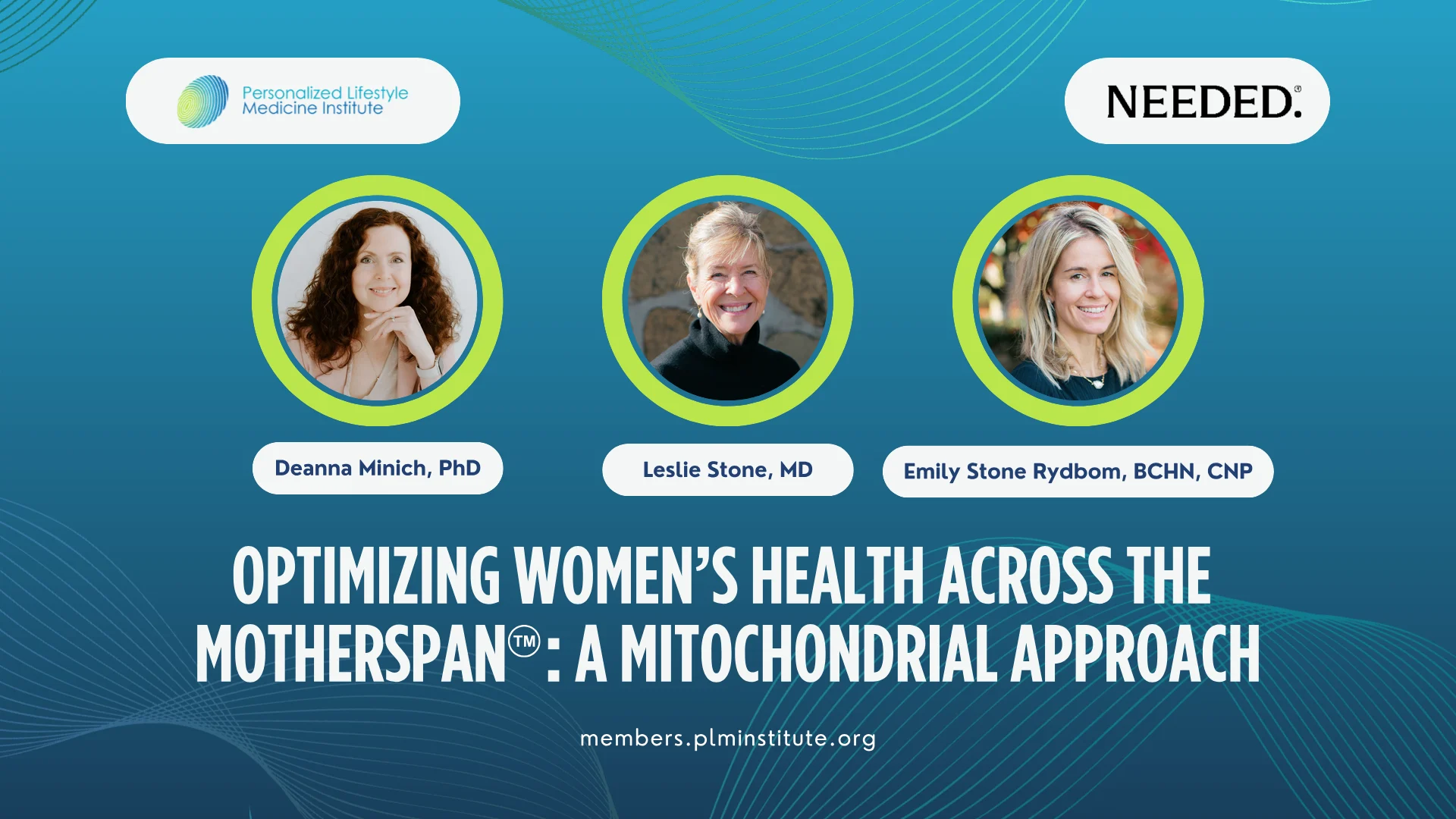
Optimizing Women’s Health Across the Motherspan™: A Mitochondrial Approach
Course Description
Mitochondrial dysfunction is increasingly recognized as a central mechanistic driver of reproductive aging, subfertility, pregnancy complications, and the metabolic and hormonal transitions of perimenopause. As primary regulators of cellular energy production, redox balance, steroidogenesis, and apoptosis, mitochondria play a critical role in oocyte quality, placental development, and endocrine resilience across the female lifespan. However, widespread micronutrient insufficiencies—affecting up to 95% of women—compromise mitochondrial biogenesis, efficiency, and adaptive capacity.
In this advanced clinical webinar, Dr. Leslie Stone and Emily Rydbom examine emerging research on mitochondrial health across the Motherspan™, with a focus on clinically actionable interventions. The discussion spans the 3–4 month preconception window—during which oocyte mitochondrial integrity and metabolic programming may still be modified—through the heightened bioenergetic demands of pregnancy and placental mitochondrial signaling, and into the perimenopausal transition, where mitochondrial decline intersects with hormonal variability and inflammatory burden.
Participants will explore stage-specific mechanisms linking mitochondrial dysfunction to reproductive and metabolic outcomes, including impaired oxidative phosphorylation, altered nutrient-sensing pathways, increased oxidative stress, and reduced mitochondrial turnover. The session will emphasize identification of critical nutrient deficiencies that impair mitochondrial function and outline evidence-informed nutritional and lifestyle strategies designed to restore bioenergetic capacity and support reproductive and hormonal health.
This webinar translates complex mitochondrial and reproductive science into clinically relevant frameworks practitioners can immediately apply to assessment, intervention, and patient education—supporting precision nutrition approaches that address root causes rather than isolated symptoms.
Moderator
Deanna Minich, PhD
5-5:30 Introduction Deanna Minich
5:30-6:30 Dr. Leslie Stone and Emily Rydbom
6:30-7 Panel Discussion with all speakers, Deanna Minich Moderating
Speakers
-
 Deanna Minich, PhD, CNS, IFMCP
Dr. Deanna Minich is a nutrition scientist, functional medicine educator, and author with more than two decades of experience exploring how hormones, metabolism, nutrition, and lifestyle intersect to shape human health. Her work integrates endocrinology, phytonutrient science, circadian biology, and systems medicine to help clinicians understand hormonal physiology within the broader context of metabolic function and daily living. In addition to her role as Chief Science Officer at Symphony Natural Health, she is the 2025 recipient of the Linus and Ava Helen Pauling Award in Functional Medicine and serves on the Board of Directors for the Personalized Lifestyle Medicine Institute. Dr. Minich has authored more than 50 peer-reviewed publications and several books and has been a longtime faculty member for the Institute for Functional Medicine and other professional training programs. Her teaching emphasizes the foundational role of nutrition, phytonutrients, stress physiology, sleep, circadian alignment, and environmental inputs in shaping hormonal expression across the lifespan. She is particularly known for her work in environmental health and metabolic detoxification, illuminating how toxicants, metabolic load, and detoxification pathways influence endocrine function and overall hormonal resilience. Dr. Minich’s current work focuses on the metabolic and environmental drivers of endocrine imbalance, the hormone–mitochondria connection, and the ways food, lifestyle, and daily rhythms can support long-term hormonal vitality and well-being.
-
 Emily Rydbom, BCHN, CNP, MDHc
Emily Stone Rydbom, BCHN, CNP, and Master of Digital Health candidate, is a nationally recognized Board Certified Holistic Nutritionist, clinical nutrition consultant, and scientific advisor specializing in the implementation of functional and precision nutrition across chronic disease, pediatrics, and maternal wellness. She is an author on multiple peer-reviewed publications, a co–principal investigator on three clinical research studies, and a co-founder of a clinically validated, integrated perinatal OB–nutrition care model designed to improve pregnancy and intergenerational health outcomes.
Her work has been instrumental in advancing scalable, evidence-informed maternal nutrition pathways, particularly within diverse and low-socioeconomic communities, across Oregon, Nevada, California, and soon in North Carolina (2026) through partnerships with Medicaid managed care organizations, hospital systems, and OB-GYN clinics. These initiatives integrate micronutrient biomarker assessment, nutrigenomics, microbiomics, and personalized nutrition counseling within real-world clinical workflows and have demonstrated meaningful reductions in maternal and neonatal adverse outcomes.
Emily has also helped co-create a first-of-its-kind nutrigenomic test designed to assess genetic variants associated with maternal and neonatal outcomes, translating emerging genomics research into actionable clinical decision support. A member of the National Association of Nutrition Professionals, she bridges clinical nutrition science, genomics, digital health, and implementation research.
Internationally, her work extends to Great Britain, the Philippines, and Abu Dhabi through the GrowBaby, GrowHealth, and GrowBaby Life Project platforms. GrowBaby Life Project, a nonprofit environmental partner of 1% for the Planet, was a finalist in the Action for Women’s Health Global Call. In 2026, she will serve as co-principal investigator on a groundbreaking, multi-site study launching in partnership with a Medicaid managed care organization, hospital system, and OB-GYN clinic.
-
 Leslie P. Stone, Family Medicine/Obstetrics IFMCP
Leslie Stone, MD, is a Board Certified Family Practice Obstetrician with fellowship training in Surgical Obstetrics, a published researcher, and an internationally recognized lecturer. She is highly regarded for integrating functional medicine principles into evidence-based, insurance-reimbursed obstetric care. She is a primary author on multiple peer-reviewed publications in maternal and perinatal health and a co-founder of a clinically validated, integrated perinatal OB–nutrition care model designed to improve pregnancy and intergenerational health outcomes.
Dr. Stone was also the owner of a family practice clinic serving diverse clinical populations across two rural settings, bringing deep experience in rural and community-based care delivery. Since 2011, she and Emily Stone Rydbom have implemented the GrowBaby model in a high-Medicaid obstetric setting, demonstrating over a decade of improved pregnancy and birth outcomes across four states and four delivery systems. She has served as principal investigator on multiple GrowBaby studies and is the principal investigator of the ROOT Study, a 500 mother–baby dyad study launching in North Carolina (2026). She has delivered more than 5,000 babies and continues to provide OB call coverage.